
Advertising Industry Deploys Autonomous AI Agents to Run Full Campaign Lifecycles
New platforms now automate the entire ad supply chain from brief to execution, marking a shift from AI-assisted tools to fully autonomous campaign management.
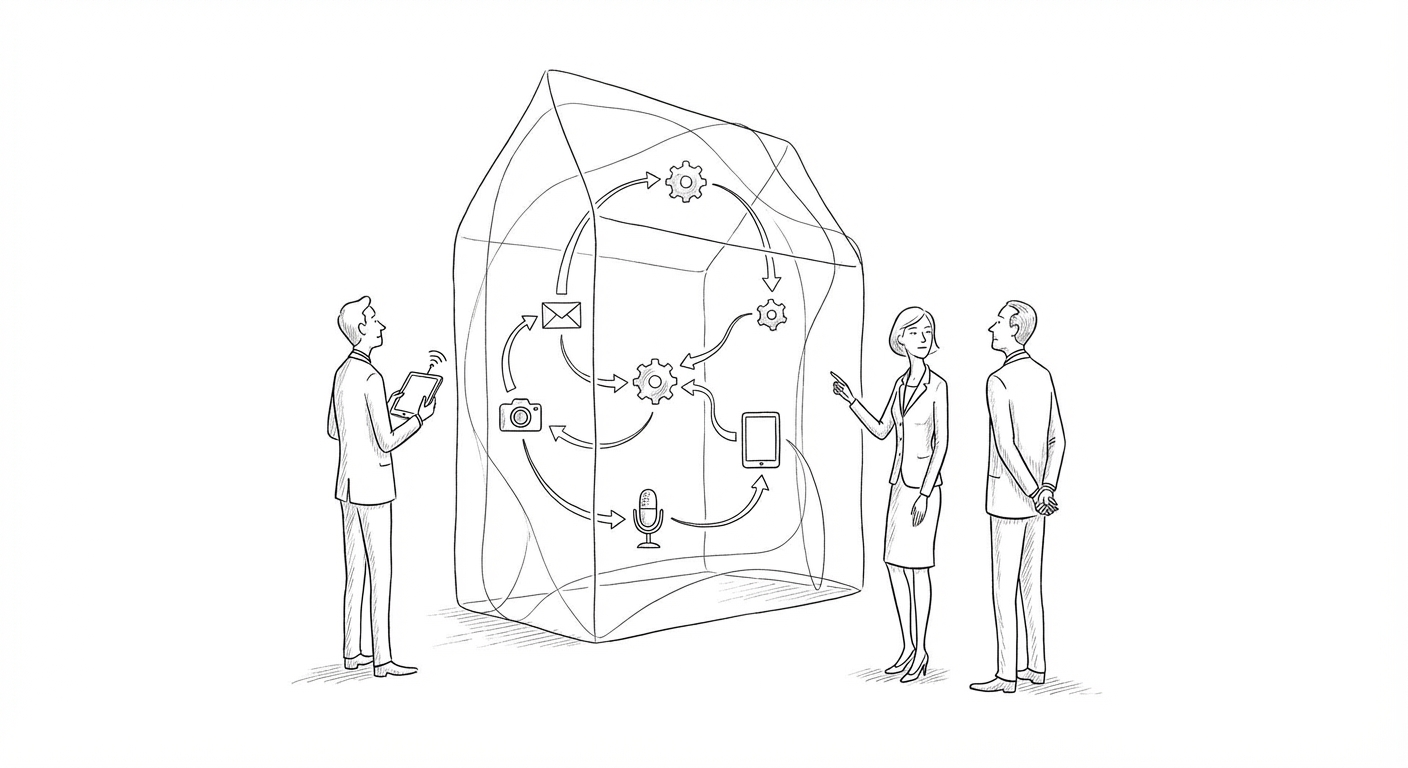
The advertising industry has begun deploying autonomous AI agents capable of managing complete campaign lifecycles without human intervention at each step, representing a fundamental shift in how media buying and creative execution are orchestrated.
A new agentic AI platform launched last week enables brands and agencies to plan and activate media campaigns through conversational interfaces using what developers call "neuro-contextual intelligence" technology. The system, which operates through text and voice commands, automates processes from campaign brief through competitive analysis, audience building, creative recommendations, and live deployment.
"The majority of the industry are still stuck chasing and trying to find consumers in browsers or wherever the technology allows advertisers to change them," Seedtag CTO Kartal Goksel told MediaPost. The platform scans web content in real time, processing millions of signals from publishers to understand page context, detecting user interest, emotional tone, and purchase intent across approximately 10 million URLs daily.
The technology builds contextual audiences and launches campaigns autonomously, then generates performance metrics and applies learnings to subsequent efforts. "Our focus is on contextual and content, not on specific users," Goksel said, distinguishing the approach from traditional user-tracking methods that have faced increasing privacy restrictions.
Google advertisers previously criticized excessive advertising automation from the search giant. The emergence of generative AI-powered agents now extends automation beyond optimization into strategic planning and creative development, compressing timelines that traditionally required multiple teams and approval cycles.
(The development follows broader industry movement toward agentic AI systems that execute multi-step workflows autonomously, raising questions about creative oversight and the changing role of media planners and buyers.)
The advertising sector has historically adopted automation in waves, from programmatic buying platforms in the 2010s to algorithmic bidding systems. Each phase generated resistance from practitioners concerned about loss of control and creative judgment. The current generation of AI agents differs by claiming to handle strategic decisions previously reserved for senior campaign managers, including audience definition and messaging strategy.
The shift occurs as major technology platforms integrate AI capabilities across enterprise workflows, with Microsoft expanding AI copilots and Google embedding generative features into productivity tools. NVIDIA's hardware and developer ecosystem has become foundational infrastructure for companies building specialized AI applications, enabling regional players to develop locally tailored solutions atop shared technical foundations.
Keywords
Sources
https://www.mediapost.com/publications/article/413501/ai-will-soon-run-an-entire-ad-campaign.html?edition=141938
Details new autonomous platform that automates entire ad supply chain from brief through execution and performance analysis
https://tvnewscheck.com/ai/article/ai-will-soon-run-an-entire-ad-campaign/
Frames launch of neuro-contextual intelligence platform as response to advertiser criticism of excessive automation
https://techcrunch.com/sponsor/navetix/as-ai-infrastructure-spreads-globally-talent-strategy-is-becoming-the-real-competitive-edge/
Positions advertising development within broader ecosystem shift where Microsoft, Google, and NVIDIA provide foundational infrastructure
https://www.itnews.com.au/feature/ai-driven-attacks-shrinking-response-window-for-security-teams-elastic-warns-624182
Highlights executive pressure for tangible AI strategies and shift from experimentation to practical deployment across industries