
Agribusiness Enters 'Second Wave' of AI as Experimentation Phase Ends, Expert Warns
Industry faces operational overhaul as margins tighten and regulatory pressure mounts. Regional manager declares 2026 the year of real implementation across agri-food value chain.
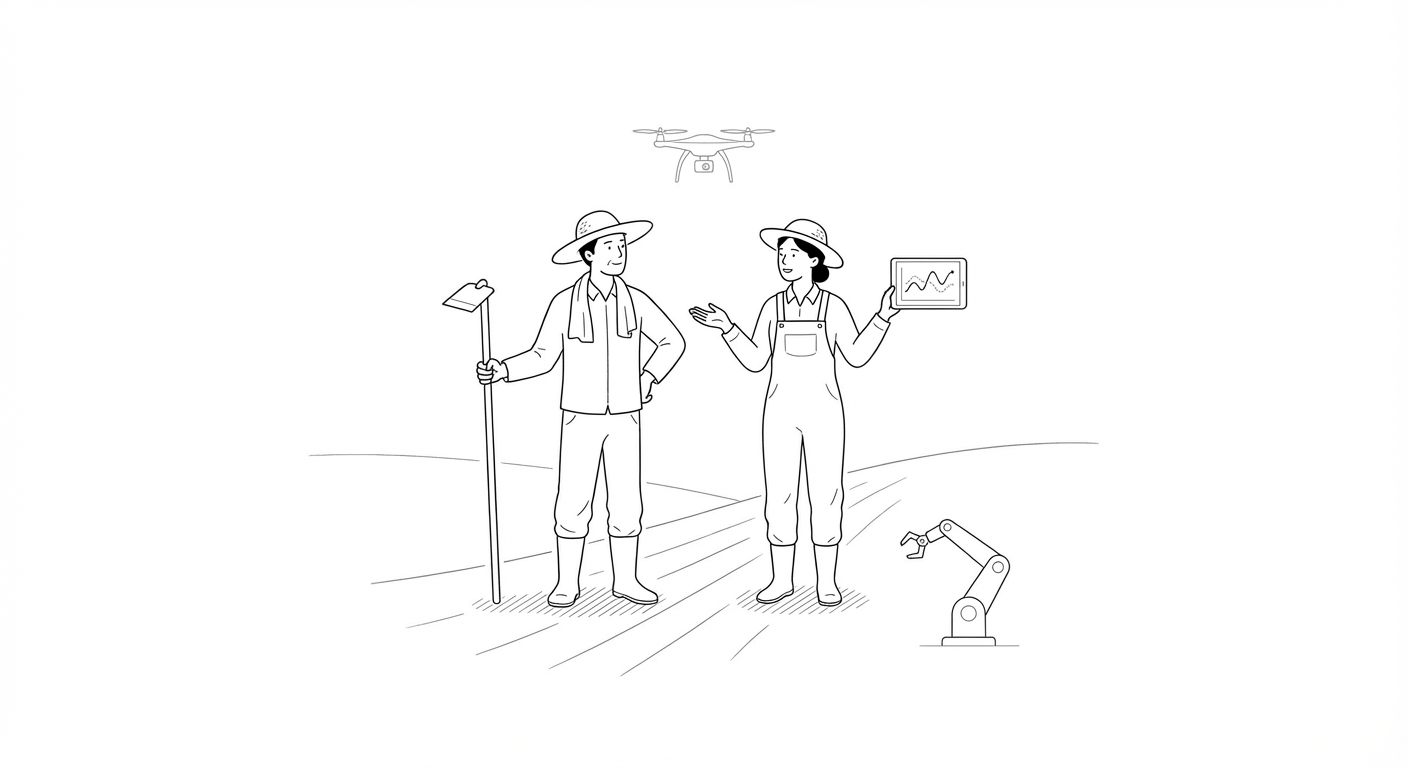
Artificial intelligence is moving from experimental deployment to operational necessity in agribusiness, according to industry specialists who say the sector has entered a critical implementation phase that will reshape business models across the agri-food value chain.
Rodny A. Coronel, Regional Manager at ELO Digital Office España, characterized the shift as the "Second Wave" of AI, marking a transition from pilot projects to enterprise-wide integration. "2026 will be the year of real implementation," Coronel stated, speaking at an event in Barcelona focused on AI adoption in agriculture.
The technology is advancing beyond document management into automation of administrative and operational processes, driven by tightening profit margins and mounting regulatory requirements. Industry observers describe the moment as decisive for competitive positioning, with operational efficiency and adaptability becoming determining factors in market survival.
(Spain's AI Factory initiative, backed by approximately €198 million in investment, is expected to enable development of solutions in climatology, biotechnology, and data analytics—domains critical to agricultural operations. The facility aims to provide infrastructure for companies developing sector-specific applications.)
The agricultural sector's AI trajectory mirrors broader enterprise adoption patterns, where initial enthusiasm has given way to pressure for measurable returns. While technology firms have positioned AI as transformative across industries, agribusiness faces unique constraints including seasonal variability, supply chain complexity, and regulatory frameworks that vary by region and crop type.
The declaration that experimentation has ended comes as other sectors grapple with similar implementation challenges. Enterprise software spending rose 15 percent to $1.4 trillion in 2026 even as AI-related market volatility erased hundreds of billions in valuations, suggesting uneven adoption across use cases and industries. Agricultural applications face additional hurdles including data standardization across fragmented supply chains and integration with legacy systems in processing and distribution.
Keywords
Sources
https://www.global-agriculture.com/ag-tech-research-news/second-wave-of-artificial-intelligence-set-to-be-decisive-for-agribusiness-expert-says/
Primary coverage of Coronel's "Second Wave" thesis and Barcelona event; emphasizes business model redefinition in agriculture
https://letsdatascience.com/news/ai-agents-reshape-saas-winners-and-losers-emerge-4854f936
Enterprise software spending data showing 15% growth to $1.4 trillion despite market volatility; contextualizes adoption pressures
https://www.cnet.com/tech/services-and-software/openai-chatgpt-5-5-release-math-science-research-news/
OpenAI research leadership perspective on AI-assisted workflows; illustrates broader implementation trends across sectors
https://www.newsweek.com/entertainment/video-games/experts-say-everyones-doing-it-when-it-comes-to-generative-ai-in-games-11878394
Gaming industry's use of AI for asset generation and workflow automation; parallel adoption pattern in creative production