
AI Cited as Entry-Level Job Threat as U.S. Hiring Rebounds Amid Geopolitical Volatility
March job gains surprised economists, but concerns mount that artificial intelligence is displacing young workers in a frozen labor market shaped by trade uncertainty and Middle East tensions.
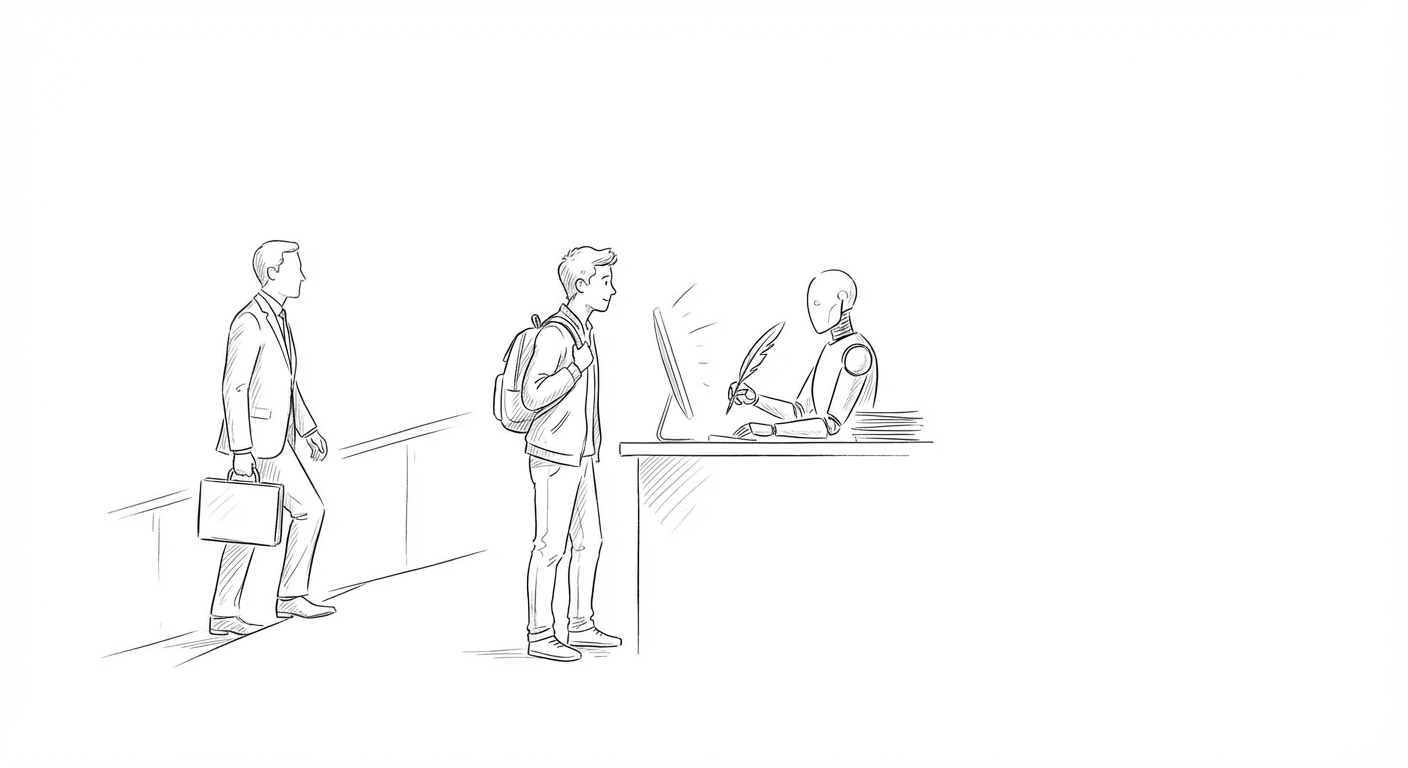
American employers added 178,000 jobs in March, rebounding sharply from February's loss of 133,000 positions, yet the recovery masks a structural shift that economists say is locking younger workers out of the labor market as artificial intelligence increasingly fills entry-level roles.
The unemployment rate fell to 4.3 percent in March from 4.4 percent the previous month, though the labor force contracted by 396,000 people, reducing competition for available positions. The March hiring figure was roughly three times what economists had forecast, according to Labor Department data released in early April.
Yet the rebound follows a year in which employers added an average of just 9,700 jobs monthly, the weakest hiring outside a recession since 2002. One Labor Department measure showed hiring in late March at its weakest since April 2020, during pandemic lockdowns. Businesses have been reluctant to expand payrolls amid uncertainty over trade and immigration policy, creating what economists describe as a "no-hire, no-fire" scenario that preserves existing positions while shuttering pathways for new entrants.
Growing concerns center on artificial intelligence displacing roles traditionally filled by younger applicants. While firms hesitate to lay off current employees, the combination of automation and policy uncertainty has effectively frozen the bottom rungs of the employment ladder. The dynamic has coincided with geopolitical volatility that is reshaping corporate risk calculations across multiple sectors.
(Dell instructed employees to avoid business travel to the Middle East until mid-April and advised regional staff to work from home after Iran's Revolutionary Guard threatened to target 18 U.S.-owned companies. Internal documents obtained by Business Insider outlined safety protocols following the threats, which came amid escalating tensions that included the downing of a U.S. fighter jet over Iran and strikes on infrastructure.)
The labor market's structural challenges extend beyond immediate geopolitical risks. Senators from both parties have urged the administration to bar Chinese automakers from manufacturing vehicles domestically, reflecting broader anxieties over foreign competition and supply chain sovereignty. Meanwhile, the construction industry has flagged worker safety concerns tied to rapid data-center expansion, even as firms experiment with AI-driven project management tools.
The confluence of automation, trade policy, and international instability is reordering assumptions about workforce development. While headline job numbers suggest resilience, the underlying composition of hiring reveals a market increasingly segmented by access to technology and insulated from traditional entry points. The question facing policymakers is whether the current pause in hiring represents a temporary adjustment or a permanent recalibration of labor demand in an era of machine augmentation.
Keywords
Sources
https://www.nbcnewyork.com/news/national-international/us-march-2026-jobs-report-surprisingly-strong-weak-february/6485308/?amp=1
Emphasizes AI's role in displacing entry-level workers amid a 'no-hire, no-fire' labor market frozen by policy uncertainty.
https://www.businessinsider.com/dell-employees-middle-east-iran-threats-strike-us-companies-2026-4
Details Dell's internal safety protocols after Iran threatened U.S. companies, including travel bans and remote work orders.
https://www.reuters.com/world/middle-east/us-fighter-jet-shot-down-over-iran-search-underway-crew-us-official-says-2026-04-03/
Reports downing of U.S. fighter jet over Iran and infrastructure strikes, framing escalating military tensions in the region.
https://www.reuters.com/business/autos-transportation/senators-urge-trump-bar-chinese-automakers-building-cars-us-2026-04-03/
Covers bipartisan Senate push to block Chinese automakers from U.S. manufacturing amid trade and sovereignty concerns.