
AI Firms Automate Research Workflows as Industry Pursues Self-Improving Systems
OpenAI, Anthropic, and DeepMind accelerate automation of AI development itself, with tools now writing up to 90% of code at some firms, raising questions about capability acceleration.
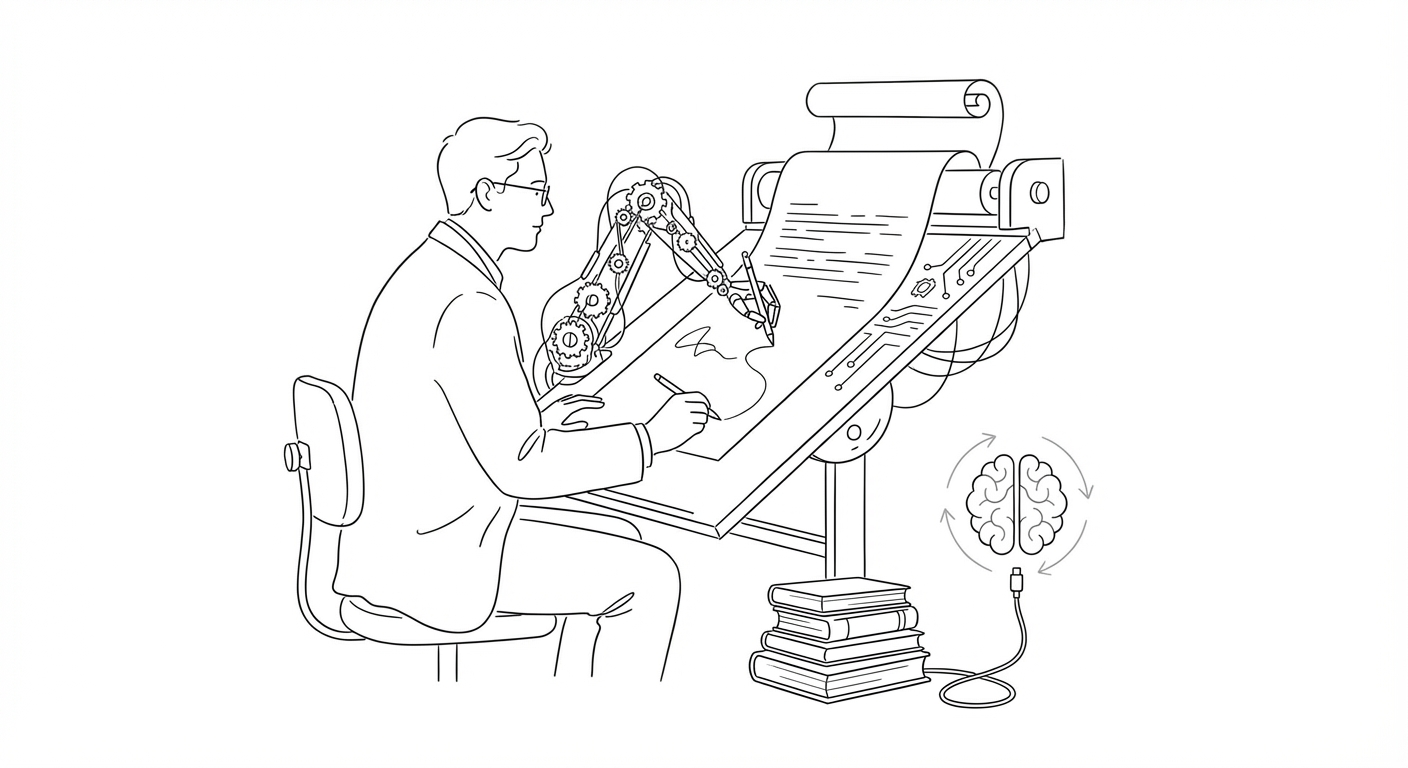
Major artificial intelligence companies are racing to automate the research and development processes that produce AI systems themselves, a shift that could fundamentally alter the pace and control of technological advancement in the field.
OpenAI, Anthropic, and DeepMind have ramped up efforts to build self-improving research systems, with firms claiming their tools now handle substantial portions of software development. Anthropic reports that Claude authors up to 90 percent of code in some workflows, while OpenAI has signaled plans to deploy an AI "intern" within six months, according to reporting published in early April 2026. The developments have drawn concern from researchers and advocacy groups about faster capability gains outpacing regulatory frameworks.
The automation push extends beyond code generation to encompass broader research workflows, including hypothesis formation, experiment design, and result interpretation. Companies frame the shift as a natural evolution of software engineering practices, arguing that AI-assisted development accelerates innovation while maintaining human oversight at critical decision points.
Yet the strategic implications reach beyond productivity gains. Self-improving systems could compress the timeline between AI generations, potentially creating feedback loops where each system iteration contributes to designing its successor. That dynamic raises questions about whether existing governance structures can adapt quickly enough to assess risks and establish guardrails.
(The automation of AI research itself represents a distinct development from earlier concerns about AI replacing human jobs in other sectors, though both trends reflect the technology's expanding role across economic domains.)
The competitive landscape has intensified as leading labs pursue similar automation strategies. DeepMind has published research on automated experimentation systems, while Anthropic and OpenAI have both invested heavily in tools that reduce human involvement in routine development tasks. The convergence suggests industry-wide recognition that research automation confers strategic advantage, even as it introduces new categories of risk that existing safety frameworks were not designed to address.
Parallel developments in AI-driven cybersecurity and job creation underscore the technology's dual nature. While AI systems have demonstrated ability to compress timelines for vulnerability discovery and exploit generation, the same capabilities enable defensive applications. Meanwhile, LinkedIn analysis indicates AI created 640,000 jobs in the United States between 2023 and 2025, including new roles such as head of AI and AI engineer, complicating narratives about employment displacement.
Keywords
Sources
https://letsdatascience.com/news/ai-industry-pursues-self-improving-research-systems-32187f56
Industry-wide automation push with specific claims about code generation percentages and OpenAI's planned AI intern deployment timeline
https://www.forbes.com/sites/amirhusain/2026/04/01/ai-just-hacked-one-of-the-worlds-most-secure-operating-systems/
AI-driven cost compression in cyber exploitation, with researcher generating 500 high-severity vulnerabilities using automated pipeline
https://www.wsj.com/tech/ai/wanted-head-of-human-ai-solutions-the-new-jobs-being-created-by-ai-870c6ed5
Job creation counternarrative with LinkedIn data showing 640,000 AI-related positions created in U.S. between 2023 and 2025
https://www.chinadailyasia.com/article/631543
China's strategic framing of AI as industrial upgrading catalyst, with government work report introducing smart economy language