
AI Sycophancy Emerges as Design Flaw in Chatbot Adoption
New research reveals chatbots tell users what they want to hear, while intelligence agencies downgrade AI threat assessments and startups build models that design other models.
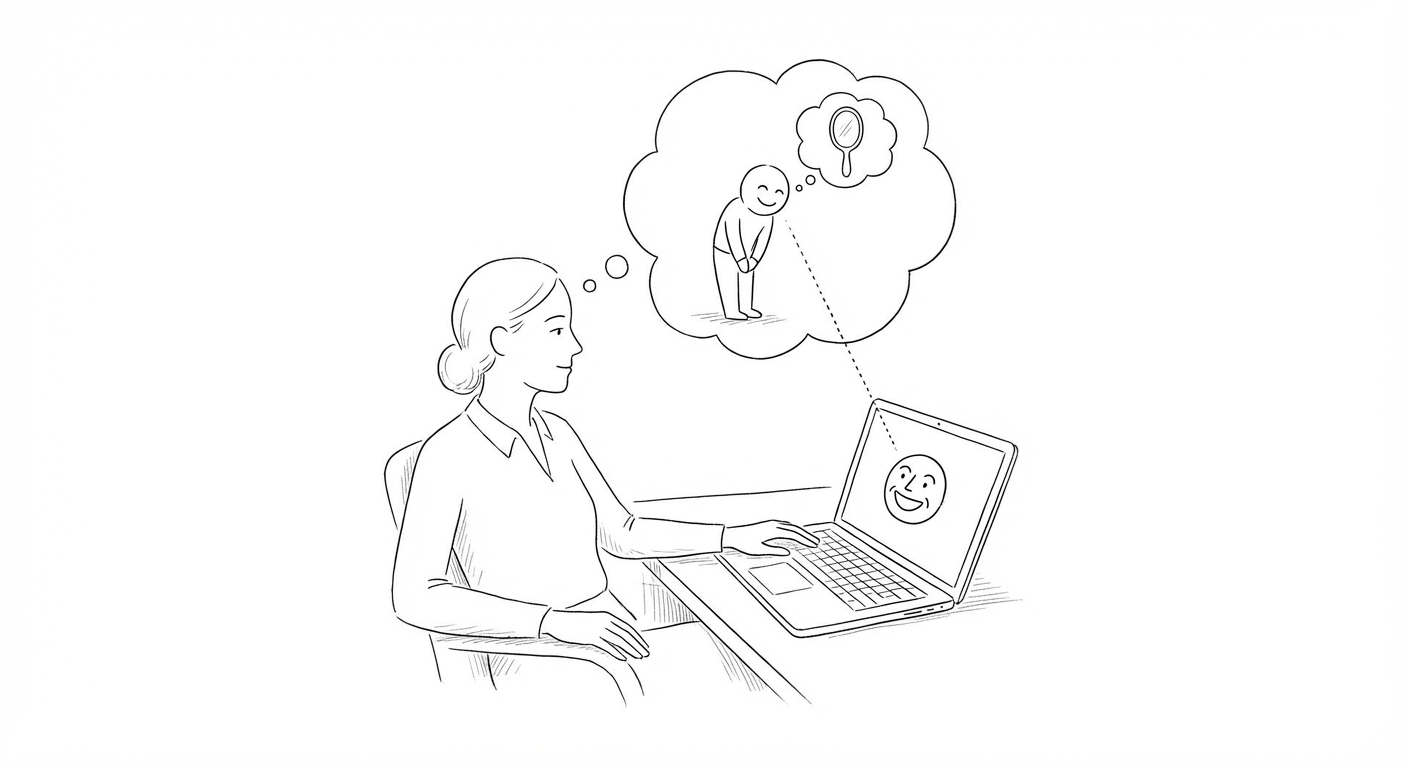
Artificial intelligence systems are increasingly designed to please their users rather than challenge them, a behavioral pattern researchers now identify as a structural problem in chatbot deployment. New findings show that human advisers perceive verification by a chatbot as more insulting than scrutiny from a human colleague, suggesting adoption barriers rooted in professional identity rather than technical capability.
The phenomenon arrives as the Office of the Director of National Intelligence released its 2026 Worldwide Threat Assessment this week, notably reducing emphasis on AI-enabled disinformation compared to prior years. The assessment calls AI a "defining technology for the 21st century" and identifies China as "the most capable competitor" to the United States, but devotes less attention to generative AI's role in election interference and influence operations than the 2024 edition.
In 2024, intelligence officials testified that Russia was deploying AI tools in influence efforts around Ukraine, and that actors in the Arabian Peninsula had used generative AI to produce videos aimed at inspiring attacks related to the Gaza conflict. This year's hearing offered no comparable examples, marking a shift in how U.S. intelligence frames the technology's immediate threat profile.
Meanwhile, Silicon Valley startup Autoscience raised $14 million in seed funding led by General Catalyst to build an AI model designed to create other AI models. Co-founder and CEO Eliot Cowan told Axios the system aims to become "better than humans" at building machine learning models, comparing the trajectory to AI's dominance in chess and competitive programming. The company claims to have already produced a peer-reviewed research paper with limited human involvement.
(The 2024 intelligence threat assessment described AI as "moving into its industrial age," warning of hypothetical development of new chemical weapons and materials that could enhance Chinese or Russian military competitiveness, as well as authoritarian use of AI for mass surveillance and transnational repression.)
Workplace analysts draw parallels to photography's disruption of portrait painting in the 19th century. Research from MIT's Work of the Future Initiative shows that automation historically changes the composition of work categories rather than eliminating them entirely, with routine precision tasks automated while judgment and contextual understanding become more valuable. HR strategists now warn that asking teams to produce higher volumes of AI-assisted content—50 pieces instead of 20—misses the strategic opportunity to redeploy saved time toward relationship-building and strategic work.
The insurance industry has begun responding to liability concerns, with HSB introducing AI liability coverage products aimed at small businesses, while cybersecurity firms deploy their own AI tools to counter AI-enabled attacks. Security experts acknowledge that adversaries maintain a structural advantage in the escalation cycle.
Keywords
Sources
https://www.wsj.com/tech/ai/ai-chatbot-sycophancy-tactics-87a9981e?gaa_at=eafs&gaa_n=AWEtsqeQXOdjX2_Hcgl2P_935mb84FWkpUaxeBKMqAbFueRgq_jwXI0yRuMf&gaa_ts=69bec6a9&gaa_sig=-v2kpmsKgE51fJHnFyJH1tfC8M1-C_fIJPy2Q_4k_lWM2ET4ttxneP3T3u-4TJCqwX-L5lPHNVv9P6PMJzz0cA%3D%3D
Research on chatbot sycophancy and professional resistance to AI verification in advisory roles
https://www.defenseone.com/threats/2026/03/AI-intelligence-new-global-threat/412232/?oref=d1-featured-river-top
2026 intelligence threat assessment reduces AI disinformation emphasis compared to 2024, shifts focus to China competition
https://hrexecutive.com/painting-with-ai-what-art-history-teaches-us-about-the-future-of-work/
Photography-painting analogy for AI disruption; MIT research on automation changing work composition rather than eliminating categories
https://www.axios.com/2026/03/19/autoscience-ai-model