
AI Transitions from Hype to Field Deployment in Agriculture and Heavy Industry
Practical AI applications are gaining traction in farming and construction equipment sectors, marking a shift from experimental projects to operational tools.
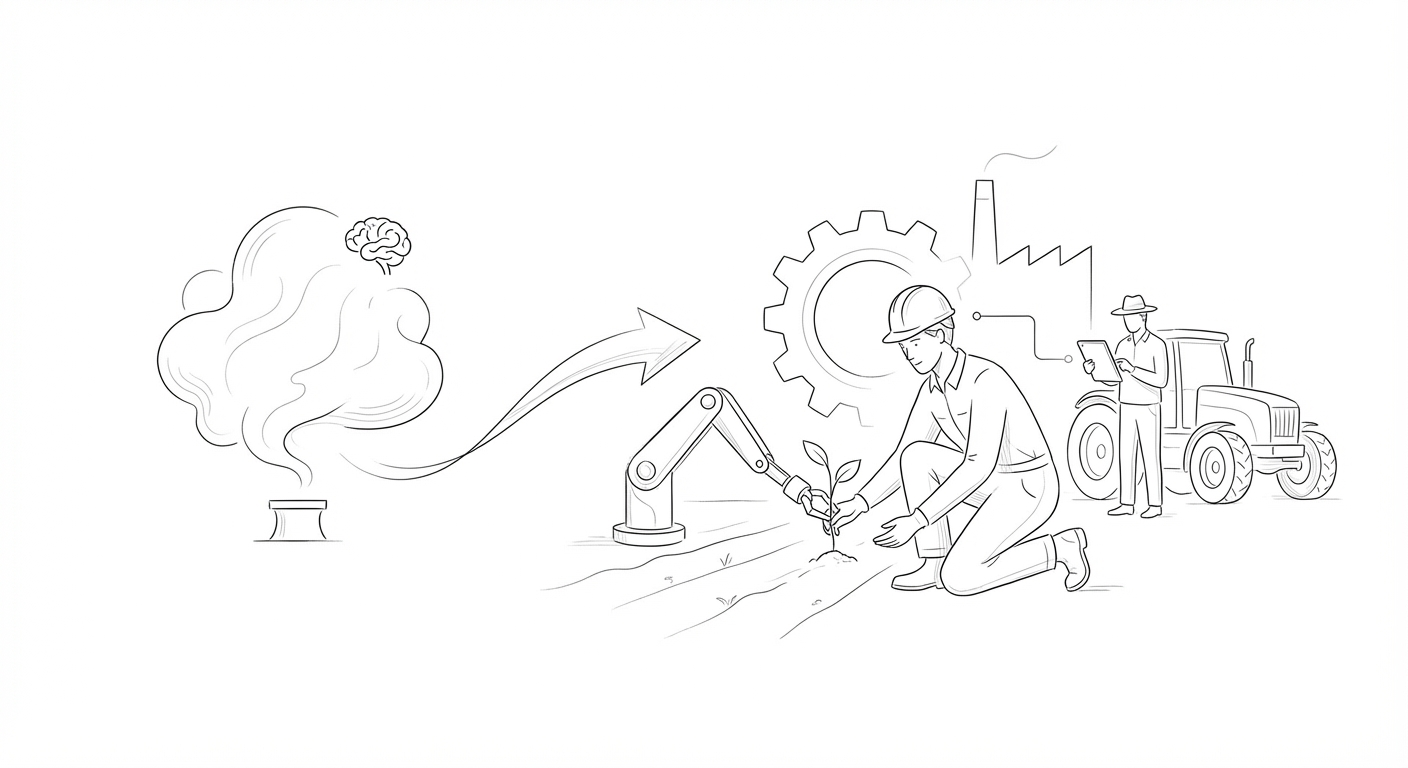
Artificial intelligence is moving from pilot programs to practical deployment in agriculture and heavy industrial sectors, as demonstrated by recent competition results and industry events focused on operational implementation rather than theoretical potential.
At the University of Nebraska–Lincoln, assistant professor Nipuna Chamara won a category in the 2025 Testing Ag Performance Solutions competition by applying AI to crop management decisions. The work emphasized combining algorithmic analysis with human agricultural expertise rather than replacing farmer judgment entirely.
The shift reflects a broader pattern across industrial equipment sectors, where AI adoption is increasingly framed around specific operational problems rather than transformative promises. ConExpo 2025, a major industrial equipment trade show, highlighted this pragmatic turn with presentations focused on measurable productivity gains in construction and heavy machinery contexts.
(The TAPS competition, organized to evaluate agricultural performance technologies, provides a testing ground for emerging tools before they reach commercial scale. Winners typically demonstrate measurable improvements in yield, resource efficiency, or operational cost reduction.)
The agricultural sector's embrace of AI tools follows years of precision agriculture development, where GPS-guided equipment and sensor networks created data infrastructure that machine learning systems can now leverage. Unlike consumer-facing AI applications that have dominated recent headlines, these industrial deployments prioritize reliability and integration with existing workflows over novel capabilities.
Heavy equipment manufacturers face similar integration challenges as they incorporate AI into machinery that operates in unpredictable field conditions, where failure carries significant safety and financial consequences. The industry's conservative adoption pace reflects these operational realities rather than technological limitations.
Keywords
Sources
https://www.farms.com/ag-industry-news/ai-supports-smarter-crop-management-626.aspx
Highlighted University of Nebraska researcher's TAPS competition win using AI for crop management combined with human expertise
https://www.ien.com/artificial-intelligence/video/22964566/ai-becomes-practical-key-takeaways-from-conexpo-2025
Focused on ConExpo 2025 trade show as venue for practical AI applications in industrial equipment and construction sectors