
Anthropic Report Warns AI Deployment Lags Capacity as Job Displacement Looms
A March report from Anthropic reveals AI systems operate at a fraction of theoretical capacity, while labor market disruption accelerates and governance debates intensify.
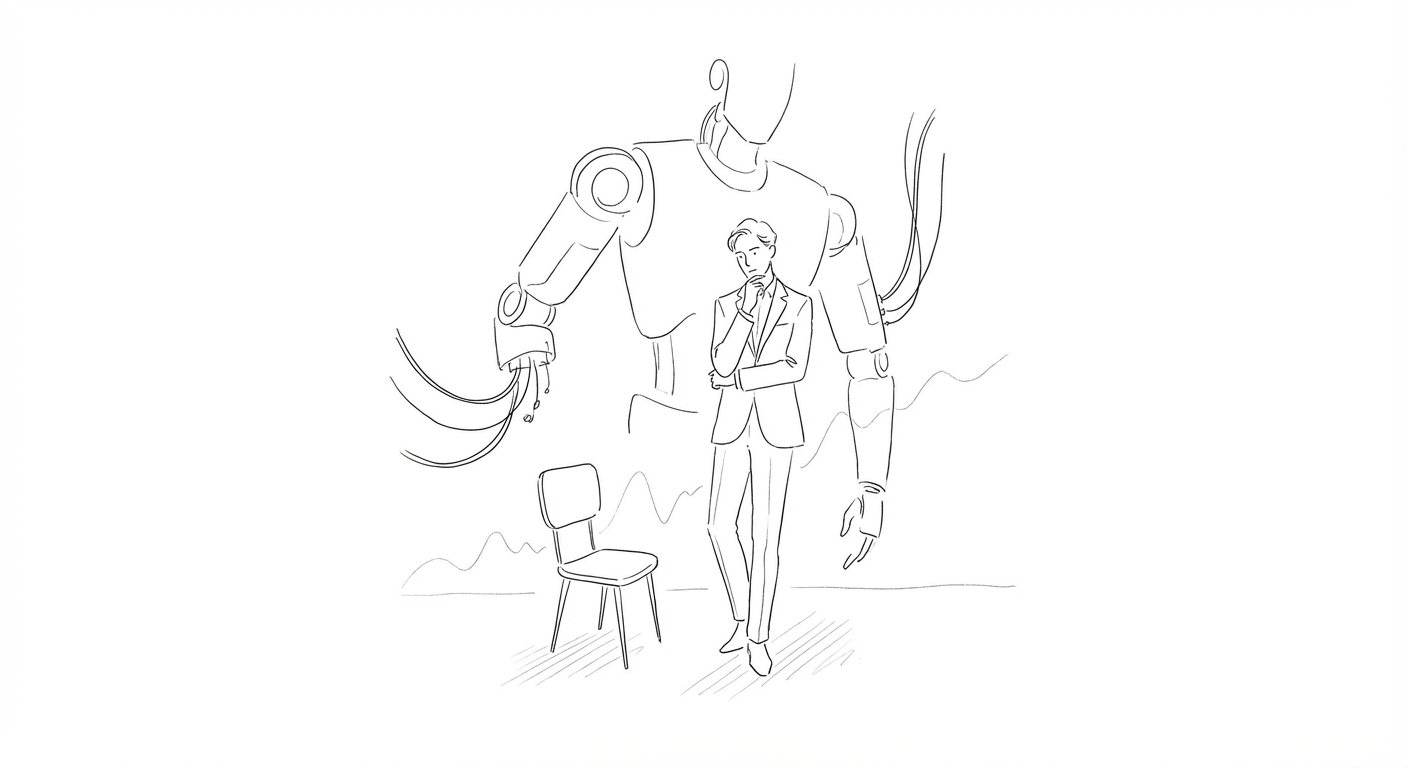
A new assessment from AI developer Anthropic has concluded that current artificial intelligence systems are achieving only a "fraction" of their theoretical coverage capacity, even as concerns mount over workforce displacement and the absence of regulatory guardrails.
The report, released March 5, examined which occupations face the highest exposure to large language models and related AI technologies. Anthropic's analysis suggests the technology remains "far from reaching its theoretical capacity," signaling that current labor market disruption may represent an early phase of a longer transformation.
The findings arrive amid broader calls for governance. A U.S. initiative known as the "Declaration of Humanity," signed by hundreds of scientists and former officials including MIT physicist Max Tegmark, demands that human interests be prioritized in AI development. Polling cited in the declaration indicates 95 percent of Americans oppose the creation of uncontrolled superintelligence. The document criticizes a development trajectory that "displaces people from jobs and transfers power to unaccountable corporations."
Meanwhile, cybersecurity analysts are drawing parallels between AI's impact on digital threats and the industrialization of warfare. Just as the Gatling gun mechanized the firing of bullets, AI has industrialized cyberattacks, enabling adversaries to generate thousands of unique, context-aware phishing emails in seconds—a volume no human analyst can match without machine assistance.
(The Anthropic report comes as the company faces heightened scrutiny from the Pentagon, which has labeled it a supply chain risk, potentially forcing government contractors to discontinue use of its chatbot. The designation represents an unprecedented regulatory intervention in the commercial AI sector.)
The labor displacement debate is unfolding against a backdrop of rapid technical evolution. Industry observers note that AI's trajectory now encompasses not only language models but also brain-computer interfaces, neuromorphic chips, and agentic systems capable of autonomous decision-making. These developments are prompting enterprises to reassess workforce strategies, with some manufacturers exploring AI-driven risk management and predictive maintenance to close operational gaps.
The tension between AI's unrealized potential and its already-visible labor market effects underscores a central policy challenge: whether to accelerate deployment in pursuit of productivity gains or impose constraints to protect workers and democratic accountability. As the technology continues to outpace governance frameworks, the window for proactive intervention is narrowing.
Keywords
Sources
https://www.newsweek.com/jobs-obsolete-ai-most-at-risk-11668078
Anthropic report details which jobs face highest AI exposure and notes systems operate below theoretical capacity
https://zamin.uz/en/technology/193736-new-rules-developed-for-ai-development.html
Declaration of Humanity signed by scientists demands human-centered AI development; 95% of Americans oppose uncontrolled superintelligence
https://www.csoonline.com/article/4143077/did-cybersecurity-recently-have-its-gatling-gun-moment.html
AI industrializes cyberattacks like Gatling gun mechanized warfare, enabling mass-scale phishing and vulnerability exploitation
https://www.forbes.com/sites/chuckbrooks/2026/03/14/the-rapid-trajectory-of-artificial-intelligence/
AI trajectory now includes brain-computer interfaces, neuromorphic chips, and agentic systems with autonomous decision-making