
Bipartisan Commission Targets AI Workforce Transition as Federal Strategy Fragments
Senators Warner and Rounds propose expert panel to guide worker adaptation, while White House and agencies pursue parallel AI workforce initiatives without unified coordination.
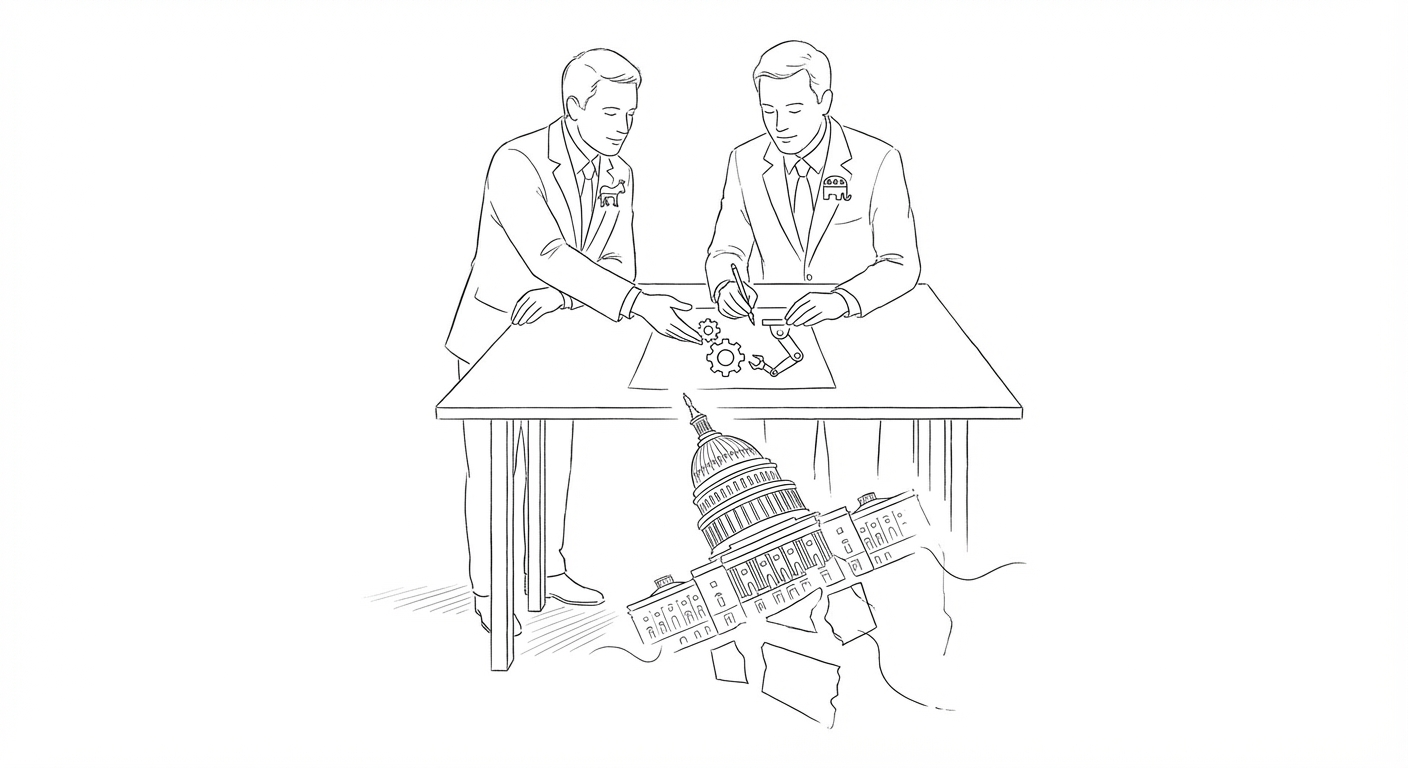
Two U.S. senators have introduced legislation to create a federal commission dedicated to preparing American workers for artificial intelligence-driven economic disruption, adding another layer to an increasingly crowded landscape of federal AI workforce initiatives.
Sens. Mark Warner and Mike Rounds unveiled the Economy of the Future Commission Act, which would assemble industry experts, academics, policymakers and members of Congress to develop what Warner's office described as "practical solutions" for workers facing rapid AI-driven change. The bipartisan proposal arrives as multiple federal entities pursue separate workforce readiness programs without apparent coordination.
The commission model represents a departure from the executive-led approach outlined in the White House's National AI Legislative Framework released Friday. That framework called on Congress to establish unified national AI policy across seven priority areas, including workforce readiness, but emphasized federal agency leadership rather than a standalone commission structure.
The Labor Department has separately launched its own hub focused on AI workforce preparation, operating independently of both the proposed commission and White House framework. The proliferation of initiatives reflects Washington's struggle to organize a coherent response to AI's labor market implications, with legislative, executive and departmental efforts proceeding on parallel tracks.
(The White House framework emphasizes a federal approach to AI governance and outlines priority areas focused on innovation, workforce readiness, infrastructure and targeted safeguards, according to the administration's announcement.)
The commission proposal follows a pattern in technology policy where Congress creates expert panels when facing complex technical questions that cut across committee jurisdictions. Similar commissions have addressed cybersecurity and critical infrastructure, though their recommendations often face implementation challenges when they conflict with existing agency mandates or require sustained funding commitments.
The competing initiatives underscore fundamental disagreement over whether AI workforce policy should flow from White House coordination, congressional commission recommendations, or individual agency programs. That fragmentation may complicate efforts to direct resources efficiently or establish consistent standards for worker retraining and transition support as AI adoption accelerates across economic sectors.
Keywords
Sources
https://govciomedia.com/lawmakers-eye-coordinated-strategy-for-ai-workforce-development/
Frames Warner-Rounds commission as bringing structure to fragmented federal AI workforce efforts across agencies