
China's OpenClaw Agent Sparks Security Alarm as Open-Source AI Gains Global Traction
Beijing warns state entities against installing the viral coding assistant, even as Chinese open-source models win adoption from Airbnb to Singapore's national AI program.
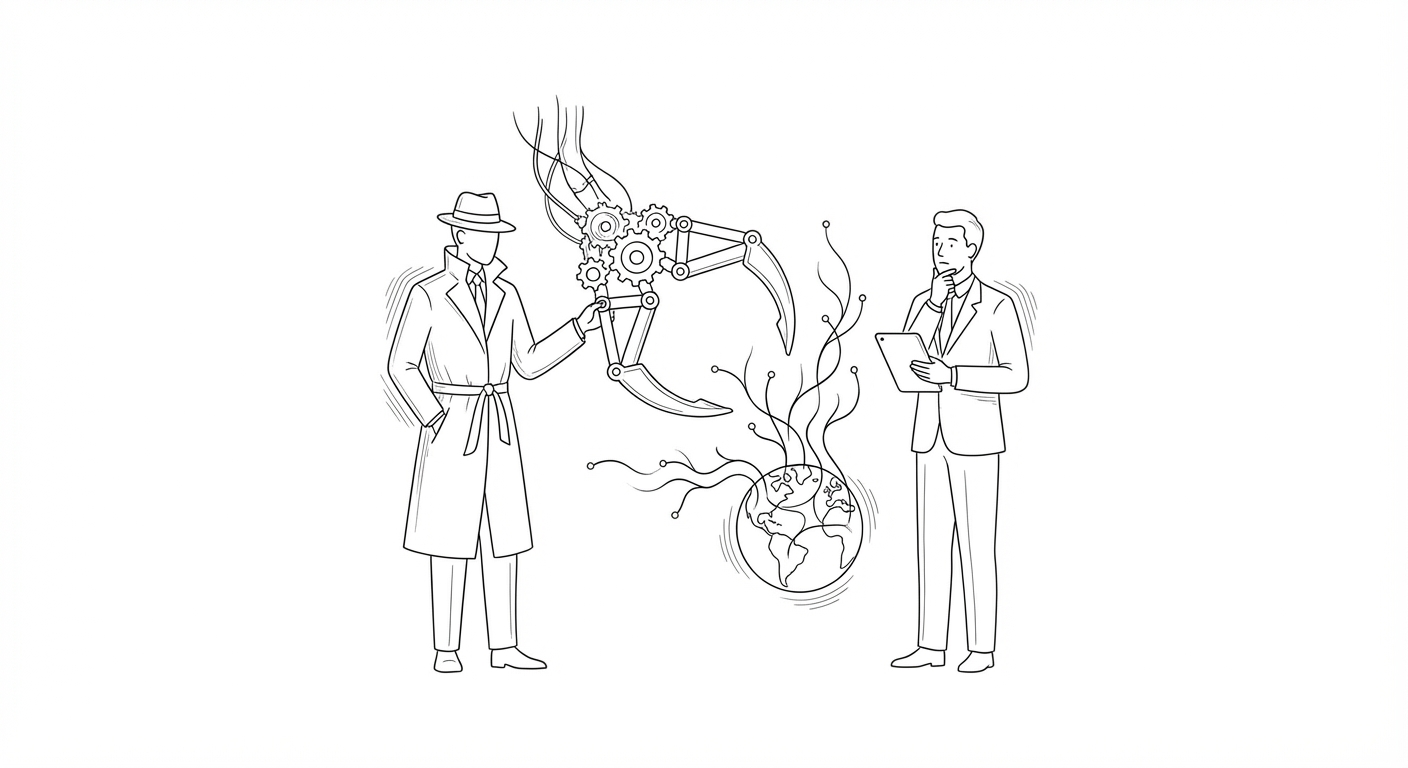
Chinese authorities have issued security warnings to government agencies and state-owned enterprises against installing OpenClaw, a viral open-source AI coding assistant, on work devices, according to reports this week. The advisory comes as the tool gains popularity domestically and Chinese open-source models secure footholds across global enterprise.
The caution from Beijing exposes a tension at the heart of China's AI strategy: promoting homegrown open-source alternatives while maintaining control over their deployment. OpenClaw's rapid adoption mirrors the broader trajectory of Chinese open-weights models, which have quietly penetrated international markets on the strength of performance and cost advantages.
Alibaba's Qwen family of models now claims over one billion downloads and deployment by more than 200,000 developers worldwide. Airbnb CEO Brian Chesky publicly acknowledged using Qwen to power customer service agents, praising the model as "very good" and "fast and cheap." AI Singapore adopted Qwen last November as the foundation for a large language model optimized for Southeast Asian languages.
"You can see the attraction of open-weights models," Jeff Walters, who leads the Asia-Pacific tech practice for Boston Consulting Group, told Fortune. "There may be a slight lag to how the latest frontier models might perform but, in a lot of situations, you don't always need the best. 'Good enough and cheap' is sometimes the right tool to pull out of the toolbox."
The appeal extends beyond cost. Open-source models offer companies strategic flexibility, avoiding vendor lock-in as they navigate shifting export controls and geopolitical alliances. For startups operating in regulatory gray zones, the ability to switch providers or self-host models provides operational resilience that proprietary platforms cannot match.
(Internal strains have emerged within Alibaba's AI operations. Local media reported disagreements between the Qwen team and company leadership over resource allocation, with engineers frustrated that cloud customers sometimes received compute access before research teams. The departure of a key figure, identified as Lin, highlighted friction between open-source ambitions and commercial imperatives, though Alibaba has affirmed its continued commitment to open-source development.)
Beijing's warning against OpenClaw suggests authorities remain wary of uncontrolled AI deployment even from domestic sources. The security rationale was not detailed in available reports, but the move signals that openness has limits when state interests are perceived to be at stake. The directive creates a paradox: Chinese open-source tools are welcomed abroad while facing restrictions at home.
The divergence reflects broader questions about the governance of open AI systems. As Chinese models gain market share through accessibility and cost efficiency, Western policymakers face pressure to balance innovation incentives against security considerations. The OpenClaw episode demonstrates that these tensions are not unique to any single jurisdiction.
Keywords
Sources
https://fortune.com/2026/03/14/openclaw-china-ai-agent-boom-open-source-lobster-craze-minimax-qwen/
Examines global adoption of Chinese open-source models and Beijing's security warning against OpenClaw on government devices.
https://www.consultancy-me.com/news/amp/12884/software-development-in-financial-services-enters-new-era-as-gen-ai-supercharges-productivity
Covers broader enterprise AI adoption trends in financial services and software development sectors.
https://www.newsweek.com/jobs-obsolete-ai-most-at-risk-11668078
Reports on Anthropic study examining workforce displacement risks from AI and large language model deployment.
https://www.bbc.com/future/article/20260309-ai-is-finding-treatments-for-incurable-diseases
Highlights AI applications in drug discovery, including breakthroughs in treating previously incurable conditions.