
IEEE Calls for Networked AI Research as Robots Shift to Collective Learning
Industry standards body seeks papers on distributed intelligence architectures where autonomous systems share knowledge in real time, moving away from centralized cloud models.
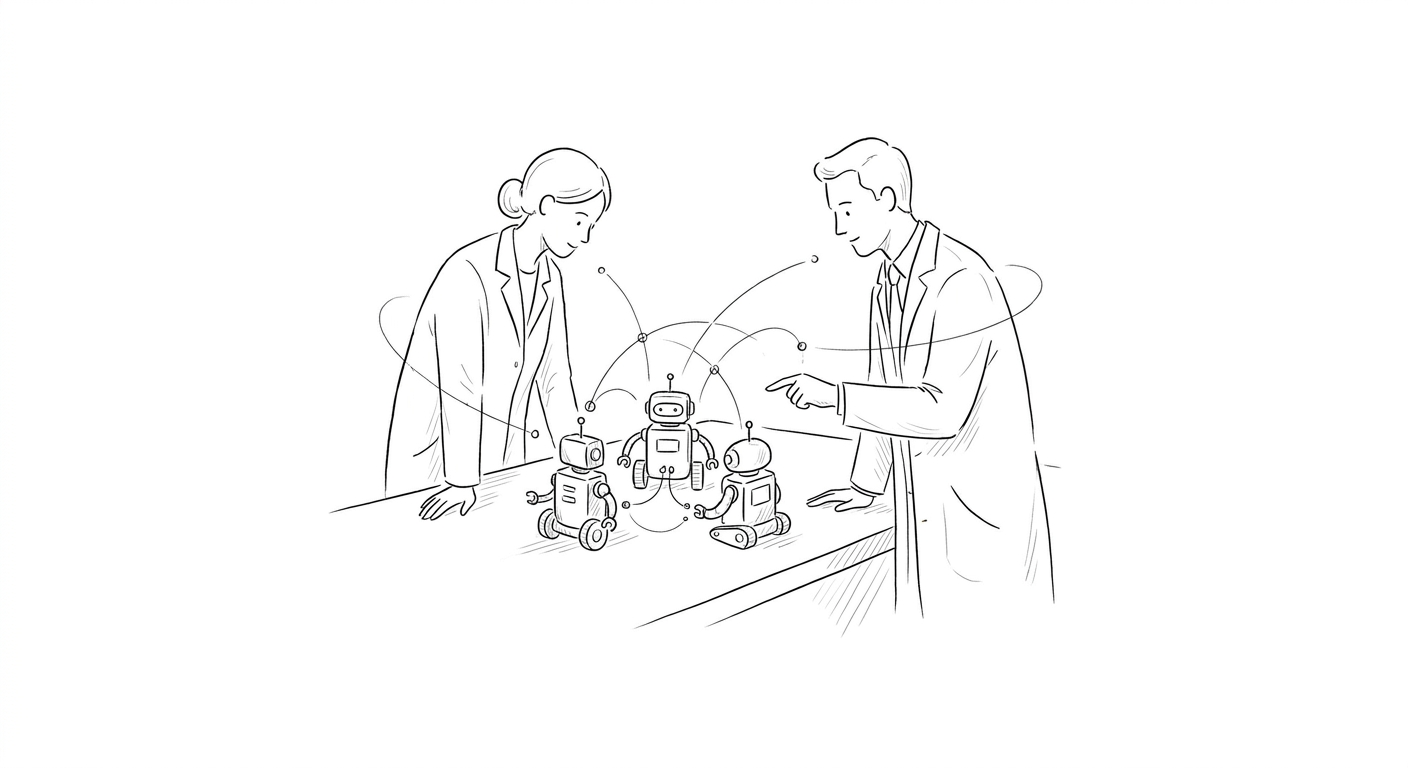
The Institute of Electrical and Electronics Engineers has issued a call for research papers on networked artificial intelligence systems, signaling a broader industry pivot toward architectures in which robots and autonomous machines learn collectively rather than in isolation.
The initiative reflects a technical shift away from centralized AI operating solely in cloud data centers and toward distributed intelligence embedded directly into physical infrastructure. Researchers are attempting to build AI architectures capable of operating more like dynamic organizations, where systems learn from each other collectively and adjust behavior continuously as conditions evolve.
Proposed research topics span coordinated sensing and control in autonomous multi-agent systems, end-cloud collaborative large language models, adaptive signal processing, online model-drift detection, cognitive communications, and networked AI systems operating in non-stationary environments. Potential application areas referenced by organizers include industry-specific large language models, scene-adaptive auto-driving systems, and real-time 3D reconstruction.
For robotics and automation, the implications could be significant. Modern industrial environments increasingly rely on fleets of autonomous systems rather than standalone machines. Warehouse robots coordinate inventory movement across large facilities, autonomous vehicles share operational data, and industrial AI systems continuously adapt to changing production conditions.
(The IEEE call for papers does not specify a conference date or submission deadline in available materials.)
The distributed intelligence model represents a departure from the dominant paradigm in which AI capabilities are concentrated in hyperscale data centers operated by a handful of technology companies. By embedding learning and adaptation directly into edge devices and networked systems, the approach could reduce latency, improve resilience, and enable real-time coordination in environments where connectivity to centralized infrastructure is unreliable or impractical.
The research agenda arrives as AI deployment accelerates across industrial sectors, even as questions about governance, safety, and accountability remain unresolved. Separate reporting indicates that AI-generated vulnerability reports are overwhelming bug bounty programs, with GitHub noting that programs across the industry are grappling with the same challenge. Meanwhile, government cybersecurity offices are adopting real-time scanning protocols as AI-assisted exploitation compresses the window between vulnerability discovery and attack.
The IEEE initiative also intersects with broader debates over AI infrastructure and market power. Scale AI, a data infrastructure provider for AI model training, recently launched a seven-figure advertising campaign in New York and San Francisco, while lobbying efforts by AI integrators including Salesforce, Box, and Twilio have intensified on Capitol Hill. Regulatory attention to AI risk is increasing, with proposed federal legislation such as the AI LEAD Act signaling a trend toward accountability frameworks that could subject AI developers to product liability standards.
In financial services and insurance, AI adoption is reshaping compliance and claims management workflows. Visa uses AI models across billions of transactions to detect anomalies in milliseconds, while providers such as Onfido and Jumio have demonstrated how AI-enabled identity verification can compress know-your-customer checks from days to minutes. Advisory firms note that AI-led automation and process improvements in portfolio companies can support margin expansion of more than 10 percent in the medium term in the right settings.
The networked AI research agenda reflects a recognition that the next phase of AI deployment will require systems that can operate autonomously in dynamic, unpredictable environments while coordinating with other systems in real time. Whether existing governance frameworks can keep pace with the technical evolution remains an open question.
Keywords
Sources
https://roboticsandautomationnews.com/2026/05/14/ieee-explores-future-of-networked-ai-where-robots-learn-collectively/101547/
Focuses on IEEE call for papers and technical shift from centralized to distributed AI architectures in robotics.
https://cyberscoop.com/ai-vulnerability-reporting-bug-bounty-noise/
Highlights how AI-generated vulnerability reports are overwhelming bug bounty programs across the industry.
https://www.govtech.com/spotlight/ai-arms-race-new-tech-is-changing-government-cybersecurity
Examines government adoption of real-time scanning as AI compresses exploitation windows for vulnerabilities.
https://www.washingtonpost.com/wp-intelligence/ai-tech-brief/2026/05/15/ai-tech-brief-ai-integrators-hit-hill/
Reports on AI integrators including Salesforce and Box intensifying lobbying efforts on Capitol Hill.