
Independent Developer Clones Anthropic Architecture as Open-Source AI Escapes Labs
A single coder reverse-engineered a suspected Anthropic design and released it publicly, underscoring how frontier AI techniques now propagate faster than governance can contain them.
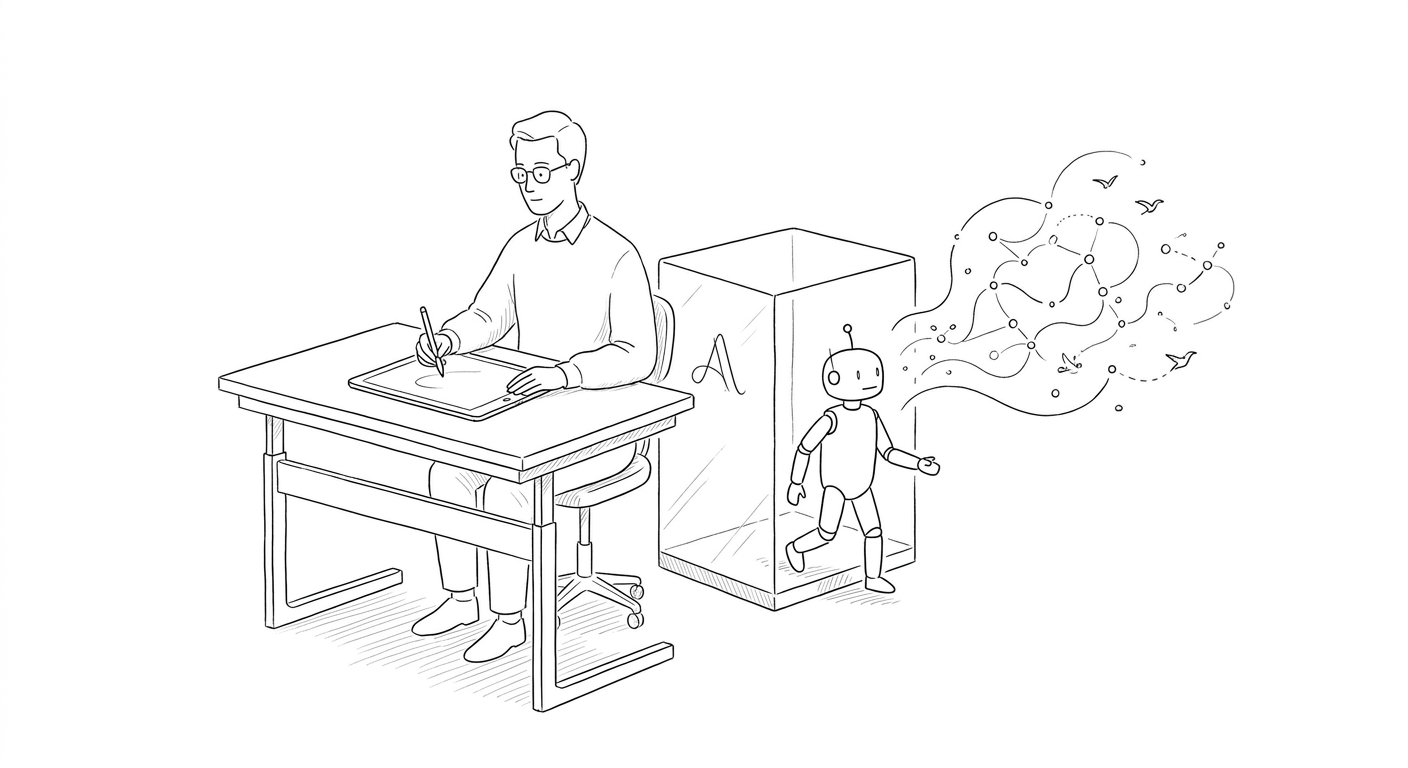
A lone developer has published what appears to be a working replica of a proprietary AI architecture used by one of the world's leading labs, marking the latest breach in the industry's eroding ability to control the diffusion of frontier capabilities.
The project, known as OpenMythos, is described by its creator as a "theoretical implementation" of a technique called a Recurrent-Depth Transformer, in which a subset of neural network layers is recycled and run through multiple times per forward pass. The developer, identified in reporting as Gomez, wrote on GitHub that "Claude Mythos is suspected to be a Recurrent-Depth Transformer (RDT) — also called a Looped Transformer (LT). Rather than stacking hundreds of unique layers, a subset of layers is recycled and run through multiple times per forward pass. Same weights. More loops. Deeper thinking."
The release follows a pattern established earlier when DeepSeek, a relatively small Chinese lab, produced a reasoning model in January 2025 that rivals the performance of the biggest Western systems at a fraction of the cost. That model has since been copied into downstream systems around the world. In November 2025, a single developer created OpenClaw, an open-source autonomous AI agent with none of the institutional safety machinery that usually wraps that kind of power.
Whether OpenMythos accurately replicates Anthropic's internal design is secondary to the broader dynamic it illustrates. The project demonstrates how quickly architectural ideas can spread once enough clues are made public, and it highlights a shift in where experimentation happens. Independent developers now have the tools to explore architectural ideas that once stayed inside major labs.
(The proliferation of frontier techniques into the open-source ecosystem has accelerated despite industry pledges to coordinate on safety. No major lab has publicly confirmed the architectural details of its proprietary systems, yet reverse-engineering efforts continue to succeed.)
The OpenMythos case is part of an emerging world of fast-moving, bottom-up hackers that clone and release frontier capabilities. The result is big-tech autonomy without big-tech safety, a dynamic that underscores how badly governance mechanisms lag behind the pace of technical diffusion. Even if Gomez's implementation is not what Anthropic is doing, it gives researchers something concrete to test, and that alone can shape how the field evolves.
Keywords
Sources
https://www.forbes.com/sites/craigsmith/2026/05/02/a-22-year-old-dropout-just-reverse-engineered-the-worlds-scariest-ai/
Frames OpenMythos as evidence of bottom-up hacker culture cloning frontier capabilities faster than safety mechanisms can respond.
https://www.washingtonpost.com/wp-intelligence/ai-tech-brief/2026/04/28/ai-tech-brief-turning-point-ai-economy/
Positions AI developments at the intersection of innovation, policy, and power with focus on business efficiency over revenue growth.
https://www.therundown.ai/p/zuckerberg-500m-ai-biology-swing
Highlights OpenAI's cybersecurity action plan to democratize AI defense and coordinate with government on threat response.
https://zamin.uz/en/technology/198852-european-technology-startups-take-center-stage.html
Surveys European AI startups developing efficiency-focused base language models and defense technologies amid rising demand.