
Karpathy's 'Dobby' Agent Reverse-Engineers Home APIs, Threatening App Economy
AI researcher demonstrates autonomous agent that scanned local networks, decoded proprietary protocols, and controlled devices via natural language—bypassing vendor apps entirely.
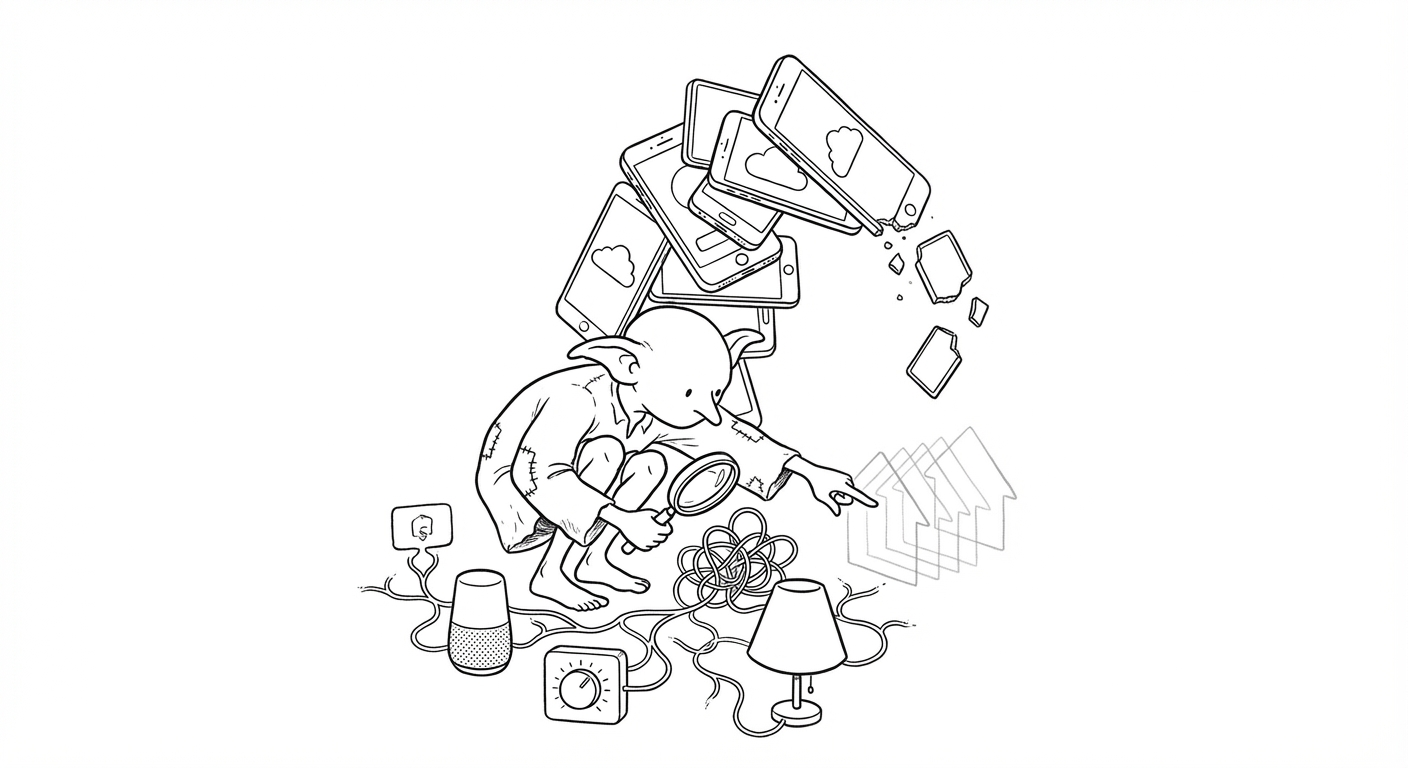
Andrej Karpathy demonstrated an AI agent on April 1, 2026, that autonomously discovered home devices, reverse-engineered their undocumented APIs, and controlled systems including Sonos speakers and lighting without manufacturer apps. The experiment, featuring an OpenClaw-based agent nicknamed 'Dobby,' used natural language as the sole interface, eliminating the need for multiple vendor-specific mobile applications.
The demonstration signals a potential structural shift in how consumers interact with connected hardware. If agents can dynamically decode proprietary protocols and unify control across ecosystems, the traditional app economy—built on siloed vendor platforms—faces erosion. Developers and device makers may need to rethink integration strategies as natural language becomes the primary command layer.
(Karpathy, formerly co-founder of OpenAI and Tesla's AI director, remains influential in shaping industry expectations around autonomous systems. The demonstration was covered by Business Insider and analyzed by Let's Data Science, which assigned it a 7.0 relevance score citing strong industry implications tempered by limited technical disclosure.)
Meanwhile, The Wall Street Journal reported that Silicon Valley startups are combining OpenClaw with AI coding tools to automate developer workflows entirely. The publication described an "OpenClaw craze" sweeping the region, with firms experimenting on internal engineering tasks before broader deployment. The convergence of agent autonomy and code generation suggests a near-term future where software development itself becomes a target for automation.
The broader context includes mounting evidence that AI agents are moving from research curiosities to operational tools. Retailers are deploying generative AI for virtual try-on to curb costly returns, while former cryptocurrency miners are repurposing power contracts to build AI data centers, according to Bloomberg. Combined market capitalization of eleven leading crypto-to-AI firms grew from approximately $2.1 billion in late 2022 to roughly $48.5 billion by April 2026, reflecting investor confidence in the infrastructure pivot.
Karpathy's demonstration arrives as OpenAI seeks to reshape user habits around AI interaction, competing for mindshare among engineers and founders whose perceptions are shaped largely by social media discourse. The company appointed Fidji Simo, former Instacart CEO, as product and business chief, signaling a push to translate research breakthroughs into consumer-facing products that challenge established software paradigms.
Keywords
Sources
https://letsdatascience.com/news/karpathy-demonstrates-agent-replacing-smartphone-apps-9005a0b3
Focused on Karpathy's 'Dobby' demo and its threat to the traditional app ecosystem via autonomous API discovery.
https://www.wsj.com/tech/ai/college-kid-brings-down-a-botnet-586d3d68?gaa_at=eafs&gaa_n=AWEtsqeImd-rsjZVqoBQD88OEsadgliPFwAZscqkkmxDtzdb0sKkl4eTlEaZ&gaa_ts=69d2568c&gaa_sig=ZcWaGzIxOmeuJdeci4PoNP5tphuYb7DzC01GbID49CRSGeKkdU5T62Uvgs6LtF3uBjq3tRW9FBJ4w_hxlPJdmw%3D%3D
Highlighted OpenClaw craze in Silicon Valley and startups automating developer jobs with AI coding tools.
https://letsdatascience.com/news/fashion-retailers-adopt-ai-virtual-try-on-6f3b6fd9
Covered fashion retailers deploying generative AI virtual try-on to reduce $849.9 billion in annual returns.
https://letsdatascience.com/news/former-crypto-miners-pivot-to-ai-data-centers-8b02943e