
Memory Shortage Triggers Smartphone Price Surge as AI Infrastructure Devours Supply
AI data center buildout is driving component shortages that will force smartphone makers to raise prices or cut specs, exposing a structural conflict between consumer tech and enterprise AI.
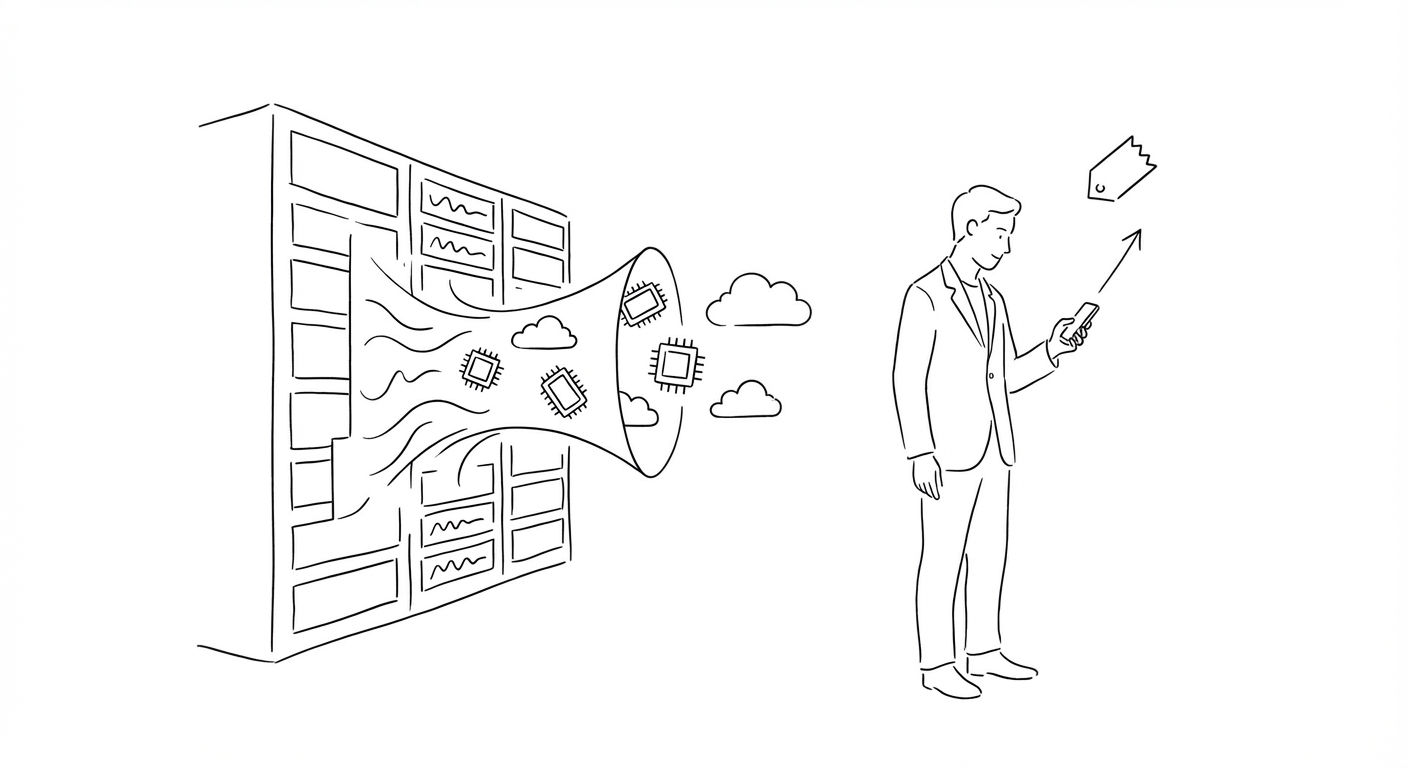
The artificial intelligence infrastructure boom is triggering a supply crunch in memory and storage components that threatens to reshape the smartphone market, forcing manufacturers to choose between raising retail prices and downgrading device specifications.
Oppo has already announced price increases across its low- and mid-range smartphone lineup in China, a move industry observers expect to spread globally as memory and storage components—which account for roughly fifteen percent of a phone's bill of materials—become scarce. Samsung has responded by restricting the majority of its Galaxy S26 family to 12 GB of RAM, reserving 16 GB configurations only for the highest-priced Ultra model in select markets.
The shortage stems from what industry analysts describe as "incessant demand" for memory and storage to build server infrastructure supporting AI workloads. Private equity firms poured $48.1 billion into data center investments in the fourth quarter alone, a five-year high and more than triple the previous quarter's $13.2 billion. BlackRock and Abu Dhabi's MGX led a $40 billion acquisition of Aligned Data Centers in October, while Blackstone invested $1.2 billion in Wolf Summit Energy to power AI-optimized facilities.
The capital flowing into AI infrastructure dwarfs venture investment in the same space. Of the $53.5 billion invested in advanced computing during the fourth quarter, private equity accounted for $44.9 billion across just 42 deals, compared to venture capital's 251 deals funding the remainder. Lambda, an AI GPU cloud services provider, raised $1.5 billion in November to operate smaller-scale facilities.
(The component shortage arrives as smartphone manufacturers simultaneously retreat from explicit AI branding. Google's Pixel line now markets features like MagicCue under approachable names rather than emphasizing artificial intelligence, while Samsung promotes Now Nudge and Circle To Search without foregrounding the underlying AI techniques.)
The supply conflict reflects a broader structural shift in technology capital allocation. "AI is eating software," one venture investor noted, describing pressure on SaaS valuations in public markets. "But in physical industries, you still must build and operate real things." The observation captures a market bifurcation where software-based AI applications face commoditization while physical infrastructure—from data centers to the semiconductors powering them—commands premium valuations and capital commitments measured in tens of billions per transaction.
The smartphone industry's vulnerability to AI infrastructure demand marks a reversal of historical patterns where consumer electronics drove semiconductor innovation and capacity expansion. Now those same manufacturers find themselves competing for components against deep-pocketed institutional investors treating data centers as a distinct infrastructure asset class.
Keywords
Sources
https://www.forbes.com/sites/ewanspence/2026/03/21/2026-smartphone-revolution-trends/
Documents Oppo price increases and Samsung RAM restrictions as AI demand drives component costs up fifteen percent of phone BOM
https://pitchbook.com/news/articles/vc-may-dominate-ai-computing-deals-but-pe-supplies-the-capital
Reveals PE invested $44.9B of $53.5B in Q4 advanced computing, with data centers hitting $48.1B five-year high
https://www.businessinsider.com/tech-memo-interview-atoms-bits-eclipse-joe-fath-2026-3
Frames AI as 'eating software' while physical infrastructure retains value, explaining SaaS market pressure versus hardware premium
https://www.cbsnews.com/texas/video/nvidia-unveils-upgrades-to-power-next-generation-of-ai-agents/
Covers Nvidia conference unveiling AI agent hardware upgrades for platforms like OpenCLAW, illustrating enterprise AI infrastructure push