
Mental Health AI Apps Show Promise as Empirical Evidence Remains Scarce
Millions use LLMs for psychological guidance despite minimal clinical validation, raising questions about societal benefit versus harm at scale.
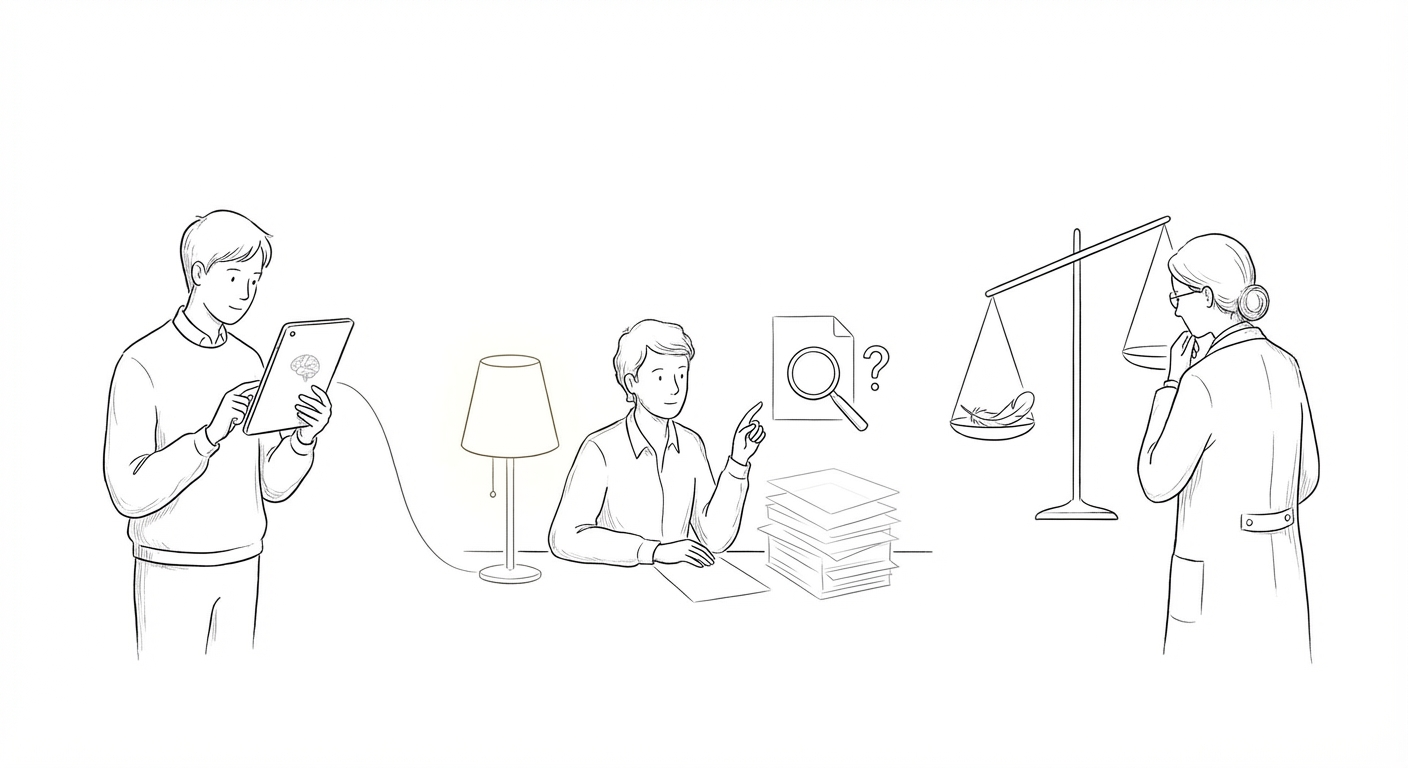
A widening gap between adoption and evidence is emerging in AI-driven mental health support, as hundreds of millions of users turn to large language models for psychological guidance while rigorous empirical studies remain exceedingly sparse.
Generic conversational AI systems including ChatGPT, Claude, Gemini, and Grok lack the robust capabilities of human therapists, according to industry analysis, yet mental health consultation ranks among the top uses of contemporary generative AI. ChatGPT alone commands over 900 million weekly active users, a notable proportion of whom engage with mental health content.
The research deficit creates uncertainty about whether widespread AI mental health adoption benefits or undermines society. If AI delivers proper psychological guidance, the technology represents a significant public health advance. Conversely, if downsides outweigh benefits, the scale of deployment could constitute what one analysis termed "a ghastly at-scale mistake."
Specialized LLMs designed to replicate therapeutic qualities remain primarily in development and testing stages, leaving most users reliant on general-purpose models not built for clinical application.
(The mental health AI landscape operates largely without the controlled trials and longitudinal outcome studies that typically precede widespread medical intervention adoption.)
The empirical vacuum persists even as the technology reshapes how millions address anxiety, depression, and other psychological concerns. Contemporary generative AI has moved mental health support into an ad hoc consultation model, with users seeking ongoing guidance from systems whose efficacy and safety profiles remain largely unquantified.
The absence of robust clinical evidence stands in sharp contrast to traditional mental health interventions, which undergo extensive validation before reaching scale. As AI mental health tools proliferate, the question of whether deployment has outpaced understanding grows more pressing.
Keywords
Sources
https://www.forbes.com/sites/lanceeliot/2026/03/23/new-empirical-study-provides-compelling-evidence-that-ai-mental-health-apps-can-reduce-anxiety-and-depression/
Highlights sparse empirical research on mental health AI despite widespread use, questioning societal benefit versus harm
https://www.mediapost.com/publications/article/413737/openai-hires-former-meta-ad-lead.html
Examines how LLMs are learning to address human requests as information delivery shifts from websites to AI agents
https://www.insurancetimes.co.uk/news/ai-returns-depend-on-redesigning-job-roles-ericson-chan/1458065.article
Focuses on AI's impact on job role redesign rather than replacement in insurance sector applications
https://www.hrmagazine.co.uk/content/news/people-who-resist-ai-will-be-replaced-warns-pwc-boss
Covers workforce adaptation concerns and AI resistance in human resources management context