
Musk's 'Terafab' Chip Plant Signals Tesla's Pivot From Carmaker to AI Infrastructure
Tesla and SpaceX plan in-house semiconductor production to support computing at gigawatt to terawatt scales, marking a strategic shift toward AI hardware independence.
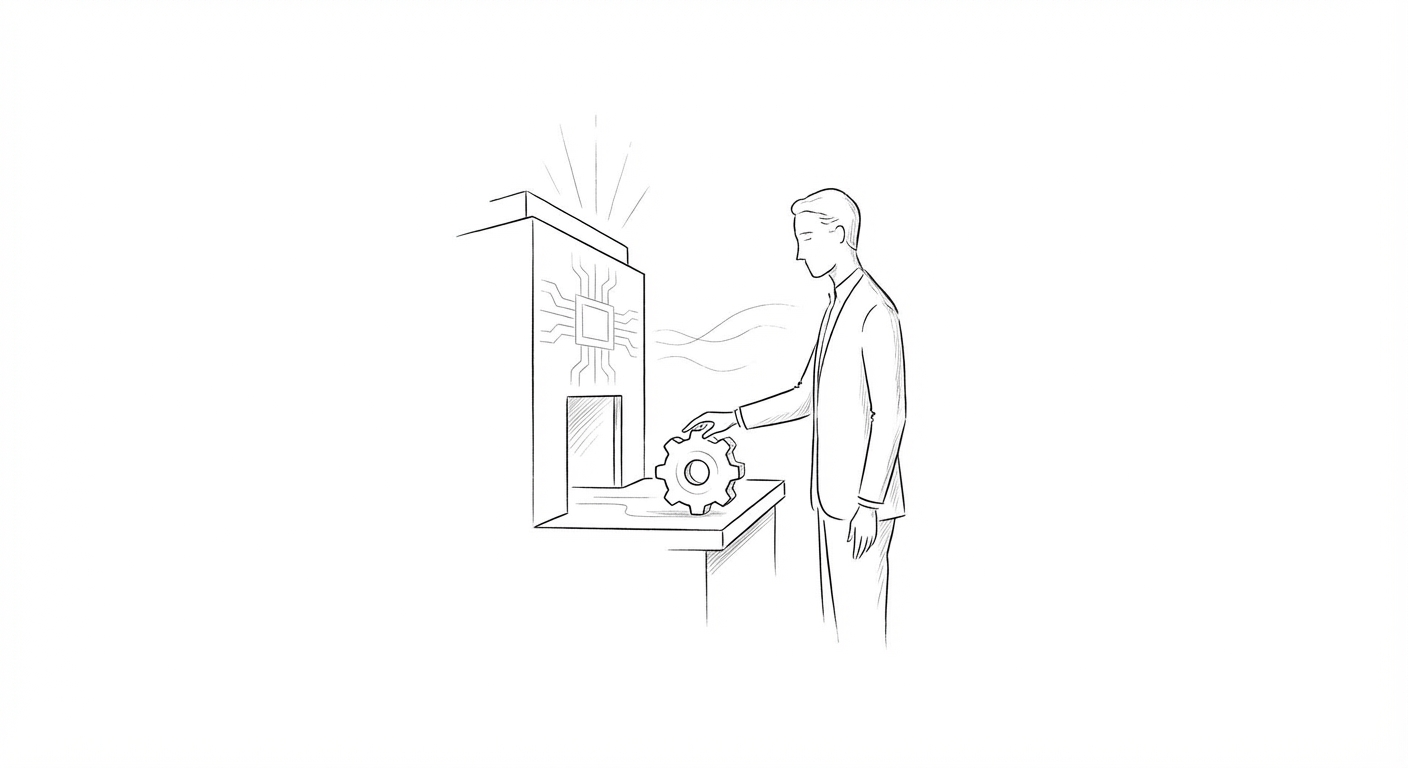
Elon Musk is positioning Tesla and SpaceX to produce their own AI chips through a planned facility dubbed "Terafab," a move that would transform the electric vehicle maker into a vertically integrated AI infrastructure company competing directly with traditional semiconductor foundries.
The Terafab initiative is designed to support computing operations ranging from tens or hundreds of gigawatts on Earth to potentially terawatt-level processing in space, according to industry reports. The scale far exceeds traditional automotive semiconductor requirements and signals ambitions that extend well beyond Tesla's core vehicle business.
"Industry watchers see this as Tesla leaning further into its identity as an AI hardware company, not just an automaker," according to coverage of the plan.
The strategy does not represent an immediate break with existing partners. Tesla maintains major production agreements with Samsung and has received positive commentary from Musk regarding leading foundries including TSMC. The in-house production appears intended as a hedge against supply constraints and geopolitical risk rather than a full replacement of external manufacturing.
(The Terafab plan comes as multiple technology companies pursue vertical integration in semiconductors, driven by concerns over chip availability, customization needs, and strategic autonomy in AI development.)
The semiconductor industry has become a central battleground in the AI race, with companies increasingly viewing chip production capacity as a competitive moat rather than a commodity input. Tesla's move follows similar efforts by Meta, Google, Amazon, and other tech giants to develop custom silicon, though the scale Musk envisions—particularly the space-based terawatt processing—represents an unusually ambitious scope.
If realized, the Terafab facility would intensify competition across the semiconductor value chain and potentially accelerate the fragmentation of chip production away from the Taiwan-South Korea duopoly that currently dominates advanced manufacturing. The plan underscores how AI workloads are reshaping corporate strategy, pushing software companies into hardware and automakers into data center infrastructure.
Keywords
Sources
https://www.kmjournal.net/news/articleView.html?idxno=9626
Frames Terafab as Tesla's evolution from automaker to AI hardware company with gigawatt-to-terawatt computing ambitions
https://www.forbes.com/sites/quickerbettertech/2026/03/21/small-business-tech-news-google-maps-gets-a-big-ai-upgrade/
Covers AI liability insurance and cybersecurity competition, illustrating broader AI infrastructure risks and capabilities
https://www.businessoffashion.com/articles/technology/nvidia-antoine-arnault-bet-on-virtual-try-on/
Highlights Nvidia's partnership on virtual try-on technology, showing AI chip demand extending beyond traditional tech sectors