
Physical Industries Positioned to Capture AI's Economic Upside, Tech Leaders Say
As debate intensifies over white-collar job displacement, executives argue that mining, farming, and trucking stand to gain most from automation—inverting assumptions about AI's winners.
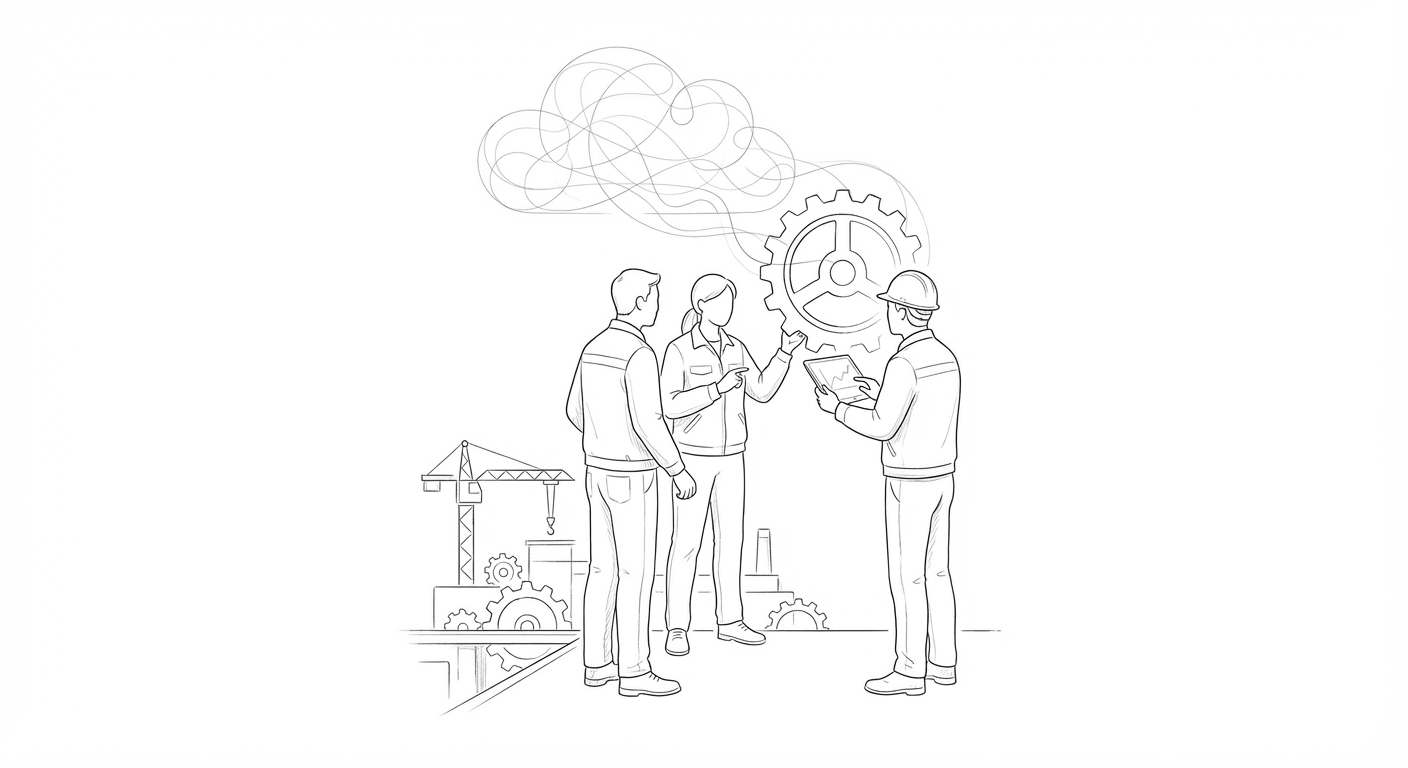
The chief executive of a $15 billion artificial intelligence company is making a contrarian bet: the biggest economic winners from AI may not be software firms or knowledge workers, but industries rooted in physical labor—mines, farms, and trucking fleets.
Qasar Younis, CEO of Applied Intuition, argues that AI's most transformative impact will occur far from laptops and office towers, in sectors long characterized by labor shortages and operational inefficiency. His comments arrive amid Wall Street anxiety over whether automation could hollow out white-collar employment and dampen economic growth, a scenario outlined in a recent research paper by investment firm Citrini that contributed to a global stock sell-off.
The thesis finds support across industry lines. Daniel Diez, chief business officer of Agility Robotics, told Business Insider that manufacturers globally "simply can't find the people to do this work," positioning robots as a solution to structural labor gaps rather than a displacement threat. Ford CEO Jim Farley noted last year that AI-powered augmented-reality tools are helping technicians repair trucks more efficiently, though he cautioned that automation's broader economic effects remain uncertain.
Meanwhile, Google this week rolled out Workspace features that can autonomously build spreadsheets by inferring data needs from column headers and fetching information from Gmail, Drive, and the web—collapsing multi-hour tasks into minutes. The capability exemplifies the kind of white-collar productivity gain that has fueled both enthusiasm and unease about AI's labor market impact.
(Business Insider reported last year that some Gen Z workers are increasingly considering trade and blue-collar careers as automation creates uncertainty around traditional white-collar professions. Separately, entrepreneur Mark Cuban told NBC News in an exclusive interview that students should "bet big on AI," though he did not specify which sectors would benefit most.)
The debate over AI's economic distribution reflects a deeper tension about technological progress and labor. Historically, automation has displaced specific job categories while creating new roles elsewhere in the economy, but the speed and breadth of AI adoption—spanning both cognitive and physical tasks—has made forecasting unusually difficult. Investment patterns suggest the market remains divided: while consumer AI tools like ChatGPT and Google's Gemini dominate usage metrics, infrastructure spending is surging in data centers, networking hardware, and enterprise AI servers, according to recent earnings reports from HPE and semiconductor firms.
Keywords
Sources
https://www.businessinsider.com/ai-biggest-winners-farms-mines-trucks-blue-collar-software-2026-3
Applied Intuition CEO's thesis on physical industries; Gen Z shift toward trade careers amid white-collar uncertainty
https://www.bloomberg.com/news/newsletters/2026-03-12/ai-advances-mean-jobs-need-an-urgent-redesign
Google Workspace automation collapsing multi-hour tasks; urgent need to redesign work roles as AI alters productivity
https://www.nbcnews.com/now/video/exclusive-why-mark-cuban-wants-students-to-bet-big-on-ai-258861125642
Mark Cuban exclusive on students betting big on AI; rise of AI data centers creating electrician job opportunities
https://www.wsj.com/business/earnings/hpe-sales-rise-on-networking-growth-despite-cloud-and-ai-decline-3673aac0?gaa_at=eafs&gaa_n=AWEtsqeunjSSVHSEyQv_tQD8pf0-eQ447XtWljUDTwO_O_OYMGgUW-Zuldk3&gaa_ts=69afc354&gaa_sig=owCD9QeXw15LWug0hlyL2sJ5k39q7hDVj06soUCl3iOMz1PsYYyQyIymki2eq4Y_3GEGKTUdsHZMjUM8AsSJBw%3D%3D
HPE earnings show networking growth and enterprise AI server order surge; infrastructure spending patterns amid market debate
https://www.cnbc.com/video/2026/03/13/bytedance-planning-to-use-nvidia-blackwell-chips-outside-china-to-further-ai-ambitions-report.html
Palantir CEO on AI elevating wartime capabilities; Perplexity's 'digital worker' concept as cloud-based AI assistant
https://www.forbes.com/sites/johnwerner/2026/03/07/choose-your-own-adventure-ai-runs-on-top-of-the-saas-pocalypse/
Legal, real estate, gaming markets in retreat; fundamental automation reshaping entire sectors beyond traditional software