
U.S. Taps Open-Source AI for National Labs as White House Weighs Pre-Release Review
Reflection AI will power DOE's Genesis Mission across 17 national laboratories, marking Washington's first major open-model deployment as a voluntary executive order looms.
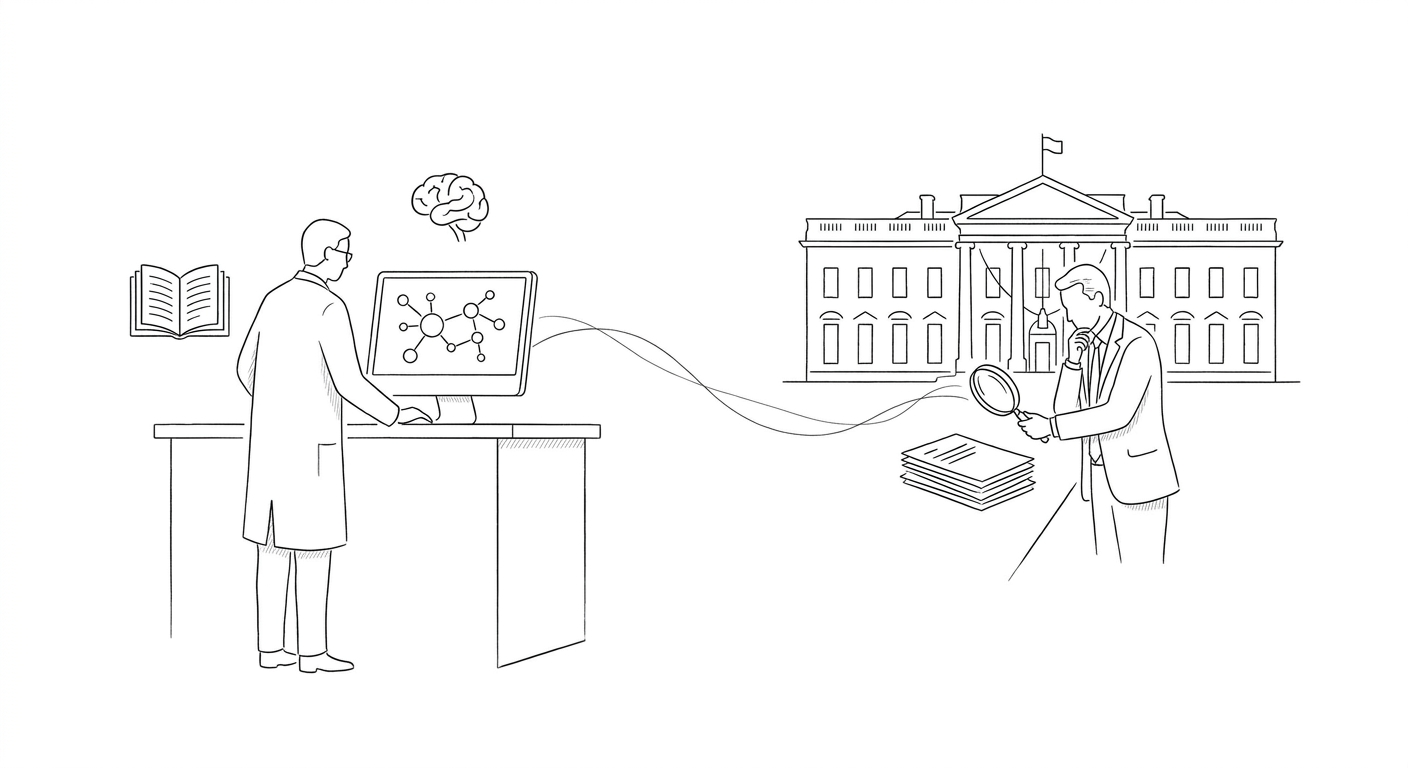
The U.S. Department of Energy has selected open-source AI firm Reflection AI to serve as the foundational intelligence layer for its Genesis Mission, a federal scientific research initiative spanning 17 national laboratories, according to an announcement shared with Axios. The partnership represents the first large-scale deployment of an open-weight model across America's premier research infrastructure, breaking a pattern of exclusive contracts with closed-model providers like OpenAI and Anthropic.
Reflection AI will supply customizable models trained on DOE data while leveraging the department's compute resources as the technology rolls out across Genesis Mission projects. The firm's CEO told Axios that scientists require full access to underlying architectures to understand and adapt systems for specialized research applications. He noted personal ties to the national lab system, describing himself as an immigrant whose parents secured employment in the facilities.
The timing coincides with White House deliberations over an executive order that would establish voluntary pre-release government review of advanced AI systems. Multiple sources told CNN the order could arrive as soon as this week, with draft language proposing a 90-day pre-launch access window for federal agencies to assess national security and public safety risks. AI companies involved in discussions are pushing for a compressed 14-day review period instead.
(The Commerce Department's National Institute of Standards and Technology announced a related evaluation framework earlier this month, but the notice has since been removed from the agency's website. OpenAI and Anthropic are both engaging with the White House on the executive order, according to sources with knowledge of the talks.)
Reflection AI has not yet issued a public frontier open-weight model but plans to do so later this year. The company recently signed a Pentagon agreement for use of its technology in classified environments and established a partnership with South Korea to build sovereign AI cloud infrastructure. Meta has made its Llama open-source models available to federal agencies under a separate GSA arrangement, while France-based Mistral has secured government contracts in France and Singapore.
The Genesis Mission deployment unfolds as Anthropic's Claude Mythos Preview has exposed structural vulnerabilities in the open-source software supply chain. The AI system scanned more than 1,000 widely used projects and identified 23,019 candidate security flaws, with external firms confirming 90.8 percent as valid. Only 97 vulnerabilities have been patched to date, revealing that volunteer maintainer capacity cannot match AI-driven discovery rates. Cybersecurity firms including CrowdStrike, Palo Alto Networks, and Fortinet have issued warnings about frontier AI risks as coding tools from OpenAI and Anthropic generate millions of lines of potentially vulnerable code.
The open-source AI ecosystem is simultaneously expanding in robotics and life sciences. Open Robotics, which maintains the Robot Operating System and Gazebo simulator, will present its strategic vision for the Open Source Robotics Alliance at the Robotics Summit & Expo in Boston next week. In the United Kingdom, the OpenBind consortium launched with £8 million from the government's Sovereign AI fund to address data limitations in structural biology and drug discovery, with its first general predictive model scheduled for release by month's end.
Keywords
Sources
https://www.axios.com/2026/05/22/reflection-ai-genesis-mission-energy-partnership
Exclusive details on Reflection AI's selection as foundational intelligence layer for DOE's 17 national labs and Genesis Mission.
https://www.cnn.com/2026/05/20/tech/ai-executive-order-trump-white-house
White House executive order timeline and industry negotiations over voluntary pre-release review period for advanced AI models.
https://cybersecuritynews.com/anthropics-claude-mythos-preview-0-days/
Claude Mythos Preview's discovery of 23,019 security flaws exposes open-source maintainer capacity crisis amid AI-driven vulnerability detection.
https://www.businessinsider.com/openai-and-anthropic-kick-off-cybersecurity-frenzy-2026-5
Cybersecurity industry warnings about frontier AI risks as coding tools generate vulnerable code faster than teams can review.